A nesting machine is configured around producing parts from sheet material, with attention to throughput and material utilisation. An ATC router uses an automatic tool changer to combine cutting, profiling, drilling and grooving in one program when the configuration supports them.
The categories overlap: an ATC nesting machine can do both. Similar gantries, tables and spindles do not mean that every configuration is equally suitable for every job. Compare the dominant workload, tooling and handling rather than treating the names as mutually exclusive.
开料机是为"从板材里切出平板件"而生,追求的是出件快、板材利用率高。ATC 雕刻机是为"同一件上做多道工序"而生,靠自动换刀把切削、铣型、钻孔、开槽串在一个程序里。做板材,开料机单位投入产出更高;做多工序复杂件,ATC 才是对的机器。
两者常被放在一起比较,因为外形相近——都有龙门、台面与主轴。实际上,“开料”描述加工用途,“ATC”描述自动换刀能力,带 ATC 的开料机可同时具备两者特征。选型应看主要任务、工艺与具体配置,不能只看品类名称。
What is the difference between nesting and ATC?
The distinction is what the configuration is optimised to do. Nesting prioritises sheet yield and a repeatable panel-processing cycle. ATC capability supports different tools and operations without manual tool replacement.
Nesting
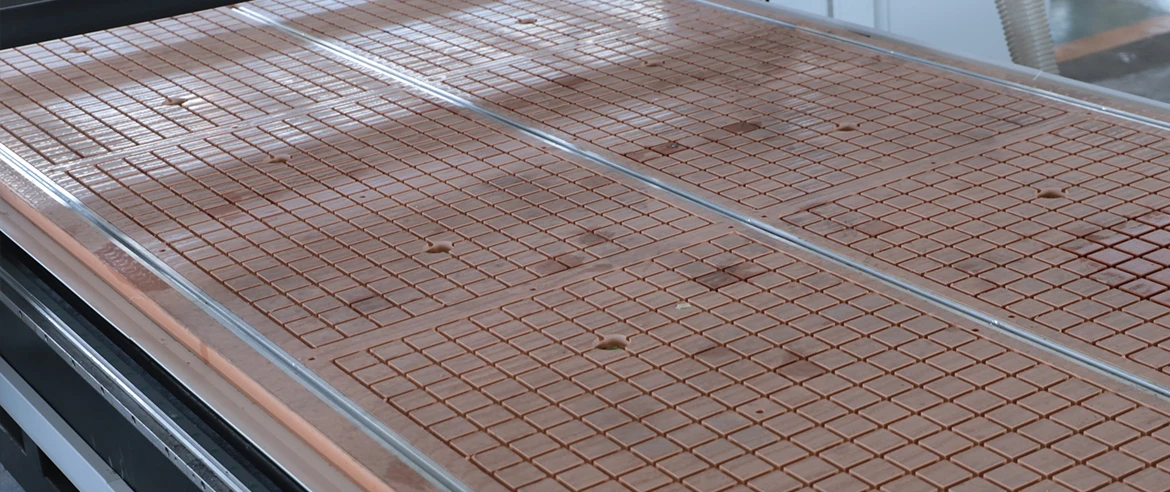
Nesting arranges part shapes on a sheet to use the material efficiently and reduce waste cutting. A typical nesting setup holds the sheet on a vacuum bed and runs a nesting program, with Z-axis requirements defined by the work.
ATC
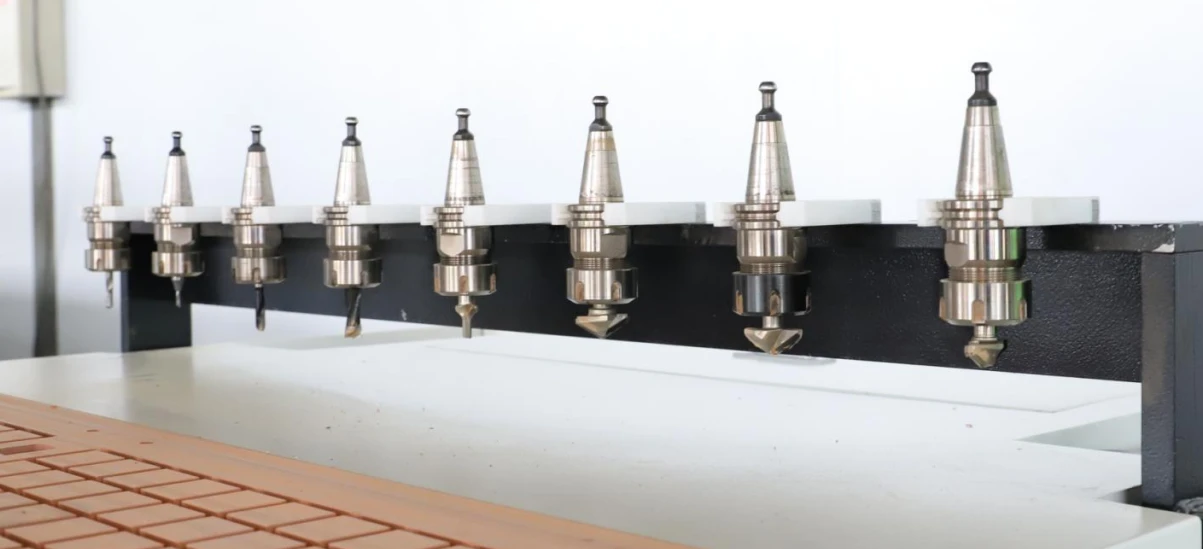
ATC means automatic tool changer: a magazine and mechanism replace the current tool automatically. A compatible router can cut, profile, drill and groove within one program by selecting the tools required for each operation.
A useful distinction is the number of parts obtainable from a sheet versus the number of operations completed without manual tool changes. A single machine may be designed to address both.
区别在于机器被优化去做什么:开料机优化板材出材率与平板切割速度,ATC 雕刻机优化工序数量与换型时间。
开料
Nesting(套裁开料)是把零件形状排布在一张板上,让材料用得最省、废切最少。开料机围绕这件事设计:整张板用真空吸附固定、控制系统跑套裁程序、Z 轴为切透板材而不是为雕琢而调校。
ATC
ATC 即自动换刀(automatic tool changer)。它是一个刀库加上换刀机构,不需要人就能把当前刀具换掉。用在雕刻机上,意味着同一个程序里可以先切割、再铣型、再钻孔、再开槽,因为机器能自己换上对应的刀。
一句话区分
开料机问的是"这张板我能出多少件";ATC 问的是"不停机我能干完几道工序"。
Which work suits each configuration?
| Part or task | Nesting-focused setup | ATC router setup |
|---|---|---|
| Flat cabinet parts from sheets | Core application | Also possible; assess whether tool changing is used |
| Drilling, grooves and shaped edges on one part | Depends on fitted tools and units | A typical multi-tool application |
| Profiled cabinet doors and panel recesses | Depends on available tools | Suitable with the right tooling |
| 3D carving, moulds and curved furniture | Not the main purpose of a basic sheet setup | Check axes, travel and tooling |
| Foam, models and patterns | Requires an appropriate configuration | Requires an appropriate configuration |
| Rotary parts such as legs and columns | Not a basic nesting task | Rotary options on selected machines |
| High sheet utilisation with few tool changes | Core application | Consider whether the extra magazine is needed |
The overlap is precisely why the quote must describe the configuration. A single-spindle nesting machine may do some profiling, and an ATC router may nest sheets. Check the production cycle rather than assuming either label guarantees efficiency.
| 工件 / 任务 | 开料机 | ATC 雕刻机 |
|---|---|---|
| 从板材切出的平板橱柜件 | 主要用途 | 能做,但换刀与配置能力闲置 |
| 一件上同时要钻孔、开槽、异形边 | 需加装特殊单元 | 主要用途 |
| 带型面与芯板凹槽的橱柜门 | 受刀具数量限制 | 主要用途 |
| 立体雕刻、模具、曲线家具件 | 非设计意图 | 主要用途 |
| 泡沫、模型与样板 | 非设计意图 | 主要用途,需对应配置 |
| 旋转类工件如桌腿、罗马柱 | 非设计意图 | 部分机型作为配置选项 |
| 高利用率、少换刀 | 主要用途 | 能做,但为不常用的刀库付了钱 |
这张表说明一件在报价里常被模糊的事:两台机器确有重叠区,而买方恰恰在重叠区被说服买错。单主轴开料机可以被推去做轻度铣型,ATC 也能切板。但两者一旦离开设计意图,效率都会掉。
Where does automatic tool changing save time?
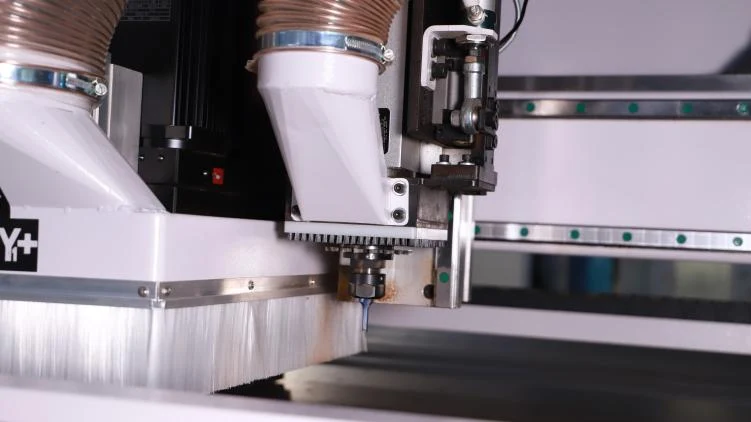
It can remove manual tool replacement, automate supported tool measurement and allow several operations to run in sequence. That depends on four connected elements:
- Tool magazine. Match capacity to the tools used by a typical part.
- Tool measurement. Confirm how tool positions and offsets are measured or recorded after changes.
- Control system. The program must call the correct tools in the correct order.
- Workholding. Vacuum holds suitable sheet material; T-slots allow fixtures where vacuum alone is unsuitable.
A magazine without a workable measurement process still requires manual checks. A program without suitable holding can still require reclamping between operations.
Ask what kind of change is being removed
A tool change within one part, a changeover between batches and a new workholding setup are different tasks. A magazine directly addresses tool replacement; it does not automatically eliminate the other two.
省在三处:减少人工换刀、通过适配的测量与控制功能减少人工对刀操作,并让一个程序连续执行多道工序。换刀后是否需要测量或复核,仍按设备与刀具管理流程确认。
机构上有四个部件决定这件事成不成立:
- 刀库。 存放这一单要用的刀具。容量是配置选择——先确认你的典型工件实际要用几把刀。
- 对刀仪。 换刀后测量刀具位置,保证刀补正确。这是"无人干预换刀"能安全成立的前提。
- 控制系统。 把换刀顺序写进程序,机器才知道哪道工序用哪把刀。
- 工件夹持。 真空台面吸附板材,T 型槽支持真空吸不住的工件加夹具。
四者缺一,ATC 就不再是优势。有刀库没对刀仪,就得人工复核;有程序没夹持,操作工就得在工序之间反复装夹——而那件事正是买这台机器要消灭的。
关于"省时间"这件事
不要单独接受任何省时说法。要问它替代的是哪一种换:同一件中途的换刀、批次之间的换型,还是人工重新装夹。这是三个不同的问题,只有第一个能靠刀库单独解决。
How to read the parameter table
The published iGW-ATC-1325 configuration is a starting point for a job-specific review:
| Item | Published value |
|---|---|
| Working area, X / Y / Z | 1300 × 2500 × 250 mm |
| Spindle | 9.0 kW air-cooled ATC spindle |
| Spindle speed | 18000 rpm |
| Voltage | AC220V/380V, 50Hz |
- 1300 × 2500 mm. Check your actual stock size, holding margins and whether longer work requires repositioning.
- 250 mm in Z. Confirm usable clearance with the tool, fixture and part installed. Axis travel is not the same as unobstructed part height.
- 9.0 kW and 18000 rpm. Discuss material, tool diameter, depth of cut and feed with the selected spindle. Air cooling avoids a spindle cooling-water circuit.
- AC220V/380V, 50Hz. Confirm the supplied electrical configuration and site services before scheduling installation.
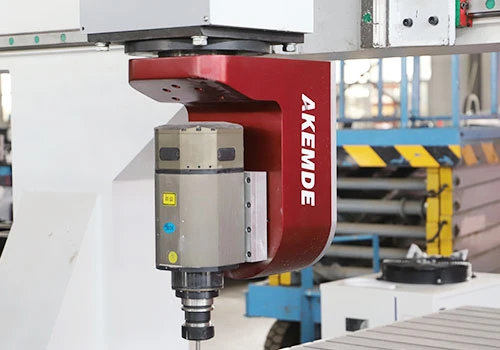
The product page also lists the spindle, tool magazine, vacuum and T-slot table, tool setter, CNC control and linear guides, with rotary and spindle-swing options subject to configuration. Use those items to check the scope of any quotation.
iGW-ATC-1325 公开的配置给出了一个具体起点:
| 项目 | 公开数值 |
|---|---|
| 工作面积(X, Y, Z) | 1300 × 2500 × 250 mm |
| 主轴 | 9.0 kW 风冷换刀主轴 |
| 主轴转速 | 18000 rpm |
| 电压 | AC220V/380V, 50Hz |
每一行都要对照你自己的活来读,而不是对照品类:
- 1300 × 2500 mm 是标准板材幅面。如果你的板件从标准板切出,这个包线覆盖整张板;若经常加工更长的料,就需要重新夹持。
- Z 向标称 250 mm 不能直接等同于工件净空。应把刀具、夹具与工件一起核对,确认实际可用高度及旋转选项所需空间。
- 9.0 kW 风冷换刀主轴、18000 rpm 决定了材料与刀具的讨论边界。风冷省掉了主轴水路;功率与转速区间决定你能用哪些刀、跑什么进给。
- AC220V/380V, 50Hz 是现场条件,不是细节。排产前先确认供电。
产品页同时列出了让 ATC 真正可用的部件——加工主轴、自动刀库、真空与 T 型槽台面、对刀仪、CNC 控制系统、直线导轨——并注明可选旋转与主轴摆动配置。这张清单可以直接当成你收到的任何一份 ATC 报价的核对表,不论供应商是谁。
What if the machine categories overlap?
IGOLDENCNC offers configurations such as linear ATC nesting machines and nesting machines with sawing units. These address workshops that cut sheets all day but also need additional operations without moving the part.
First identify the work that sustains the factory, then select a machine that handles that work efficiently. Treat secondary operations as capabilities to confirm, not assumptions.
- Which operations can this quoted configuration complete without manually repositioning the part?
- Which still require reclamping, manual tool replacement or a second machine?
Those answers define the practical machine more clearly than the category name.
IGOLDENCNC 的木工产品线里就有介于两者之间的机器,例如直线 ATC 开料机、带锯切单元的开料机。它们存在的原因是真实工厂两种活都干:整天切板,偶尔需要在不挪件的前提下补一道工序。
实用规则是:先定哪类活养活工厂,再买把这类活干得高效的机器,第二类活只作为"已确认的能力",而不是假设。对任何候选机型问两个问题:
- 按这份报价的配置,哪些工序可以在人不碰工件的情况下完成?
- 哪些工序仍需人工重新装夹、人工换刀,或者要换第二台机器?
这两个答案才定义出真实的机器,与品类标签无关。
A five-step decision checklist
- List your part families. Flat panels, doors, shaped components, moulds, foam or rotary work. Identify the dominant family.
- Count operations per part. A mainly single-tool cutting task may suit a basic nesting configuration. Several operations using different tools make ATC more useful.
- Check the stock and work envelope. Confirm the sheet fits without unwanted repositioning and check part, fixture and tool clearance in Z.
- Confirm the site. Power, dust extraction, compressed air and footprint take time to prepare.
- Assign software responsibility. Nesting needs a usable nesting workflow; multi-tool work needs correct tool calls and sequences. Decide who will prepare and maintain the programs.
- 列出你的工件族。 平板件、门板、异形件、模具、泡沫、旋转件。多数工厂有两三类,其中一类占主导。
- 数每件的工序数。 一件通常只要一道切割,开料机就够;一件要三道以上且用不同刀具,ATC 才在干实事。
- 核对板材。 确认工作面积在免重新夹持的前提下覆盖你的板,Z 向净空覆盖最厚工件加夹具。
- 确认现场。 电压、吸尘、压缩空气与占地都写在参数里,也都需要时间落实。
- 定软件这一侧。 开料要套裁软件,ATC 要带换刀顺序的程序。机器要哪一种,就得有人对它负责。
Frequently asked questions
What is the main difference?
Nesting describes sheet layout and cutting; ATC describes automatic tool changing. Nesting machines can also have ATC. Compare the actual material flow, tools and operations.
Which work suits each setup?
Nesting-focused setups suit repeated sheet processing. ATC is useful for parts requiring several different tools, profiles or machining stages, subject to the axes and holding arrangement.
What does ATC save?
Manual tool replacement and, with the right measurement and control setup, some manual tool-setting work. Several operations can then run in sequence without an operator changing every tool.
What working area is needed for cabinet panels?
A 1300 × 2500 mm working area suits many commonly used sheets, but verify your real stock dimensions and holding margins. Longer material may require repositioning or a larger machine.
Is a 9.0 kW spindle enough?
That is the published iGW-ATC-1325 configuration, with 18000 rpm. Suitability depends on the material, tool diameter, cut depth and intended production cycle. Confirm it with the tools you plan to use.
Can one machine combine nesting and ATC work?
Yes. Linear ATC nesting configurations are an example. Establish which operations can run within one setup and which require another stage.
数控开料机与 ATC 雕刻机的区别是什么?
开料机优化的是平板套裁切割的出材率与速度;ATC 雕刻机带刀库,一个程序就能完成切割、铣型、钻孔与开槽而不必人工换刀。
开料机与 ATC,各自适合什么活?
开料机适合平板件与套裁,看重出材率与切割速度;ATC 适合多工序件、异形、立体雕刻,以及换型时间占主导的订单。
自动换刀到底省在哪?
减少人工换刀,并借助适配的对刀仪和控制流程减少人工测量,让程序连续执行多道工序;仍需按设备要求管理刀具和检查加工状态。
标准橱柜板件需要多大工作面积?
1300 × 2500 mm 覆盖一张标准板,这也是 1325 级机型常见的原因。用你实际的板材尺寸核对,并确认更长的料是否需要重新夹持。
9.0 kW 主轴够做板材吗?
这是 iGW-ATC-1325 的公开配置,配合 18000 rpm。是否适合你的活,取决于材料、刀径与每刀切深——请用你打算用的刀具去确认。
一台机器能兼顾开料与 ATC 的活吗?
品类之间确有介于其中的机型,例如直线 ATC 开料机。要确认哪些工序能在无人干预下完成,其余当作第二道工序处理。
Tell us what you need to make
Send material, part dimensions, the operations required on each part and planned output. Those four answers help determine whether sheet flow, tool changes or both should drive the configuration.
把材料、工件尺寸、每件需要的工序、计划产能四件事说清楚。这四个答案决定这是一道开料题还是一道 ATC 题,它们也正是我们询盘表的字段。
- 在CNC 雕刻机与加工中心页对比全系列;
- 查看 iGW-ATC-1325 ATC 雕刻机的完整参数与部件清单;
- 如果你真正的问题是板材产能,读什么时候该从单机走到板式家具生产线;
- 评估板式加工这一侧,看木工机械;
- 准备定配置:发来材料、工件尺寸、工序与产能。