On a typical three-axis router, the spindle orientation remains fixed while X, Y and Z move. A fourth axis adds rotation of the part or head. Five-axis configurations add a second rotary movement, allowing more control of tool orientation within their mechanical and software limits.
The value is access to suitable features and the possibility of fewer setups, rather than a guaranteed increase in machining speed. Side features and undercuts still need a tool-access and collision review.
典型三轴雕刻机的主轴姿态固定,由 X、Y、Z 运动加工适配特征。第四轴增加工件或加工头的旋转;五轴配置再增加一个旋转自由度,可在机械和软件允许范围内调整刀具姿态。侧向特征与倒勾是否可达,仍需检查刀具与碰撞限制。
多出来的轴买的不是速度,是"用更少的装夹把一件活干完",以及固定垂直方向够不到的几何能力。
When are the additional axes worth considering?
Multi-axis capability deserves consideration when recurring parts contain features that the existing tool orientation cannot reach, or when repeat setups cost more than the added programming and verification effort.
Three signals point towards a closer review:
- Side features or undercuts recur in the drawings. Check their actual tool access rather than assuming every undercut needs, or can be made by, five axes.
- Parts repeatedly need another setup. Every new location requires a datum and can introduce alignment error between operations.
- Customers pay for geometry. Moulds, sculpted furniture, curved surfaces and multi-face components may justify capability beyond routine sheet work.
If most work is flat panels, doors or accessible 2.5D profiling, additional axes may see little use. A better holding arrangement or tool-changing setup could be more useful.
当你的工件里有相当比例存在"从上往下够不到"的特征,或者当工件在两次装夹之间重新定位的成本高于定向编程的成本时,多轴才成立。
三个信号指向五轴:
- 图纸里有侧向与倒勾特征。 不是偶发,而是你经常报价的那类件里反复出现。
- 工件经常要重新装夹做第二道。 每次重新装夹都需要基准,也会引入对齐误差,最终在接缝处显形。
- 客户买的是几何,不是板材。 模具、雕塑类家具件、曲线型面、多面件,卖点就是形状;够不到就是卖不了。
反过来,如果你的活是平板、门板、从上往下的 2.5D 铣型,第四、第五个轴就是付了钱却很少开票的能力。
What are the fourth and fifth axes?
The fourth axis is a rotary movement, implemented through a rotary table, chuck or head according to the machine architecture. It may reposition a part without releasing it, or support machining during rotation where the controls and software allow.
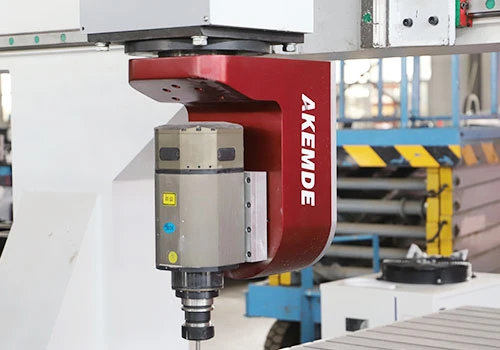
The fifth axis is another rotary movement. It can be provided by the head, table or a combination of both. Its relationship to the other axes depends on the kinematic design.
Distinguish indexed machining from simultaneous machining. Four-axis systems can support simultaneous motion when configured for it, and a five-axis machine may be used for indexed 3+2 work or full simultaneous paths. Confirm the hardware, control functions, software and agreed process.
第四轴是一个旋转轴。它要么旋转工件(通常是通过旋转台或卡盘,沿某一轴向),要么旋转主轴头。它让你不必松开夹具就能把工件转到新的面,或者在工件旋转时加工回转体。
第五轴是第二个旋转自由度,可由加工头、台面或两者组合实现,轴间关系取决于运动学设计。是否能连续改变姿态,还需确认控制与软件功能。
应区分分度加工与联动加工:适配的四轴系统也可联动,五轴设备既可能进行 3+2 定位加工,也可能执行五轴联动刀路。实际能力需确认硬件、控制、软件与工艺。
What changes in the workshop?
| Decision | Three axes | Four axes | Five axes |
|---|---|---|---|
| Access within a setup | Features accessible with the fixed tool orientation | Additional access through supported rotation | Additional tool orientations within the machine limits |
| Side features and undercuts | Limited by tool geometry, access and setup | Some features accessible by rotation | Evaluate head reach, tooling and collision limits |
| Programming | 2.5D and accessible 3D paths | Paths plus rotary indexing or motion | Paths plus indexed or simultaneous orientation |
| CAM | Suitable conventional toolpaths | Support for the intended rotary workflow | Support for the chosen 3+2 or simultaneous workflow |
| Tools | Length and geometry suit the setup | Check access and projection | Orientation may allow shorter tools in some jobs |
| Typical work | Panels, doors and accessible profiles | Rotary and indexed components | Moulds and suitable complex or multi-face parts |
| Confirm | Envelope and usable Z clearance | Rotary accuracy, chuck or table capacity | Kinematics, post-processor and interference checking |
Programming and CAM deserve a separate budget. A suitable post-processor must match the actual machine kinematics and controller. The intended multi-axis work must be proven before that capability is treated as production-ready.
| 决策维度 | 三轴 | 四轴 | 五轴 |
|---|---|---|---|
| 每次装夹可达面 | 固定刀具姿态下可达的特征 | 通过适配旋转增加可达范围 | 按结构与控制范围调整姿态 |
| 倒勾与侧向特征 | 够不到 | 分度对得上时部分可达 | 需核对加工头、刀具可达性与碰撞限制 |
| 编程 | 从上往下的 2.5D/3D 路径 | 路径 + 分度位置 | 路径 + 每段刀具朝向 |
| 需要的 CAM 能力 | 常规 | 支持旋转 | 支持计划采用的 3+2 或五轴联动工艺 |
| 刀具 | 简单、短刀 | 核对刀具伸出与可达范围 | 可在角度下使用短刀 |
| 典型工件 | 板材、门板、平面件 | 回转体、分度件、泡沫 | 模具、雕塑件、多面件 |
| 必须确认项 | 工作包线与 Z 向 | 分度精度、卡盘或台面尺寸 | 运动学、CAM 后处理、干涉检查 |
有两行值得特别注意。编程与 CAM 的变化比买方预期大:五轴机需要能生成定向刀路的 CAM,以及与该机床运动学匹配的后处理。缺了这一环,机器只能当三轴用,而硬件是多轴的钱。
Moving table or moving gantry?
Two common arrangements differ in which mass moves:
| Architecture | Moving element | What to evaluate |
|---|---|---|
| Moving table, such as iGW-5A | The table carries the workpiece through its travel | Part mass, table capacity, travel and structural layout |
| Moving gantry, such as iGW-5GM | The gantry moves the machining unit over the table | Large or heavy work, access and the gantry travel envelope |
The useful question is which mass and arrangement suit the workpiece. A fixed workpiece can be attractive for heavy parts, but neither architecture is universally more compact or rigid. Compare the actual footprint, load limits and access drawings.
The CNC router range includes both architectures as well as three-axis and multi-head configurations. Treat them as different configurations for different workloads.
五轴常见两种架构,差别在于"谁在动":
| 架构 | 移动的是什么 | 适合什么 |
|---|---|---|
| 移动台面(如 iGW-5A) | 台面带着工件运动 | 按工件重量、台面承载、行程与结构评估 |
| 移动龙门(如 iGW-5GM) | 龙门带着加工单元在固定台面上方移动 | 大件或重件,更容易保持不动 |
要定的不是哪种更好,而是"你更愿意移动哪一块质量":工件,还是主轴头。重件倾向固定台面;实际占地还需对照设备行程与布局图。
IGOLDENCNC 的 CNC 雕刻机产品线里两种架构都有,同时还有三轴机与多头木工雕刻机——这说明这个品类本质上是配置选择,而不是单一产品。
Budget for verification as well as machining
A path or orientation error can cause a collision with the part, fixture or machine on any CNC system. Additional rotary movement makes it especially important to model the actual holder, tools, clamps and moving structure.
Ask two questions about a multi-axis quotation:
- Can the proposed CAM generate the intended paths, and is there a verified post-processor for this machine and controller?
- Where will simulation and collision checks be performed, and do they include the relevant machine motions, holders and fixtures?
Checks may be performed in CAM, specialist verification software or supported controller functions. Do not assume the controller alone provides a complete machine simulation. Define the verification and commissioning process before running production work.
三轴机上刀路错了,通常在工件上表面留下一道看得见的过切。五轴机上朝向错了,刀柄可能以某个你预想不到的角度撞进工件或台面。
这就是五轴作业必须先做仿真的原因,也是控制系统的干涉检查与精度同样重要的原因。对任何五轴报价问两个问题:
- 你用的 CAM 能生成并验证五轴刀路吗?是否有匹配该机床和控制系统、经过验证的后处理?
- 在哪一环节进行仿真与干涉检查,是否覆盖相关机床运动、刀柄与夹具?
仿真可由 CAM、专用验证软件或适配的控制器功能承担,不能默认控制器自带完整机床仿真。应在生产运行前明确验证与调试流程。
When is three-axis machining the better choice?
- The parts are flat or nearly flat, and all required features are accessible with the planned setup and tools.
- Output depends mainly on sheet throughput rather than complex geometry.
- The programming workflow is centred on 2.5D and accessible top-down 3D work.
- The order mix is mainly panels and doors rather than sculpted or multi-face components.
In this situation, investment may be better directed towards a suitable working area, automatic tool changing or improved holding. Review the nesting and ATC comparison and the iGW-ATC-1325 configuration.
以下情况留在三轴:
- 工件是平板或接近平板,所有特征从上往下都够得到;
- 产量由板材吞吐决定,而不是由几何决定;
- 你的 CAM 与编程能力集中在 2.5D 与从上往下的 3D;
- 客户要的是板材与门板,不是雕塑件。
这种情况下,钱更适合花在更大的包线、换刀系统或更好的夹持上——这些决策分别见数控开料机与 ATC 雕刻机与 iGW-ATC-1325 参数。
A checklist before choosing the axis count
- Classify the last 50 parts by required orientations and features. If one setup covers most work, investigate whether more axes would actually be used.
- Mark side features and undercuts, then check possible tools, setups and access for each.
- Count present reclamping operations and the cost of any alignment errors reaching the customer.
- Confirm the CAM workflow, compatible post-processor and verification method.
- Compare part mass and size with a moving-table or moving-gantry architecture.
- Describe how the machine will be used during a busy shift. If it will mostly run three-axis jobs, distinguish future capability from current capacity.
- 把最近 50 个工件按"需要加工几个面"分类。多数只要一个面,到此为止。
- 对需要多面的件,标出哪些特征属于倒勾或侧向。逐个比较工具、装夹与可达性,不能只凭特征名称决定轴数。
- 数出现在每件要重新装夹几次,以及一次对齐误差流到客户手上要付多少。
- 确认你的 CAM 能生成并验证定向刀路,且该控制系统有可用后处理。
- 用工件重量与尺寸核对架构——移动台面还是移动龙门。
- 问一句:忙起来的时候这台机器会怎么用。如果答案是"多数时间当三轴跑",那几个轴是储备产能,不是生产能力。
Frequently asked questions
When are additional axes worth paying for?
When recurring features need additional orientations, or fewer setups can justify the programming, verification and equipment costs. Flat work does not automatically require more axes.
What do the fourth and fifth axes do?
They add rotary movement through the table, head or both. The available indexed and simultaneous operations depend on the machine, controller and software.
Can a five-axis machine run three-axis work?
Often it can, but the program, work offsets and post-processor must be suitable for the actual machine. Confirm compatibility instead of assuming an existing program can be run unchanged.
Is special CAM needed?
The CAM and post-processor must support the intended rotary or simultaneous workflow and the machine kinematics. The verification process must also cover tool and machine interference.
How do moving-table and moving-gantry machines differ?
A moving table carries the part; a moving gantry carries the machining unit over the table. Compare actual load, travel, footprint and access rather than assuming either is always better.
Is five-axis machining slower than three-axis?
Not necessarily. Orientation planning and verification can add preparation time, while fewer setups may reduce other time. Compare the complete cycle, including setup and rework.
三轴与五轴雕刻机,什么时候多出来的轴才值?
当经常性订单里存在侧向或倒勾特征,或者工件重新装夹的成本高于定向编程的成本时。平板件不适用。
第四轴与第五轴到底做什么?
第四轴旋转工件或主轴头,使新的面不必松夹就能加工;第五轴再加一个旋转,让刀具能以角度贴着表面。
五轴机能不能跑三轴程序?
通常可安排三轴加工,但程序、坐标与后处理必须适配该设备,不能默认旧程序原样通用。也应确认计划中的多轴能力是否会被实际使用。
五轴加工需要专门的 CAM 吗?
需要。要能生成定向刀路、有匹配运动学的后处理,并且能在运行前做干涉仿真。
移动台面与移动龙门的五轴机有什么不同?
移动台面机是工件在动;移动龙门机是加工单元在固定台面上方动。重件倾向固定台面,而固定台面需要更多占地。
五轴机比三轴机慢吗?
本身不一定慢,但定向刀路与仿真会增加编程时间。真正要算的是单件总时间,含装夹与返工。
Tell us what you need to make
Send material, dimensions, the faces and features to be machined, and required output. These inputs make an axis-count discussion specific.
把材料、工件尺寸、需要加工的面与特征、产能发给我们。这四个答案比任何对比表都更快定出轴数,也正是我们询盘表的字段。
- 在CNC 雕刻机与加工中心页对比全系列;
- 换刀这一侧的选择,读数控开料机与 ATC 雕刻机;
- 如果你的活是板材与门板,从 iGW-ATC-1325 的包线开始看;
- 准备定配置:发来材料、工件尺寸、特征与产能。