Start with the largest workpiece or sheet, then check workholding space and the travel needed by the tool path. A nominal 1300 × 2500 mm working area is larger than a 1220 × 2440 mm sheet, but usable margins depend on the machine, vacuum arrangement, fixtures and tooling.
A larger machine can accommodate work that does not fit a smaller one. Repositioning becomes a process decision when the part still exceeds the confirmed usable envelope. Compare both routes rather than assuming that larger always means suitable.
先确定最大工件或整张板材,再核对夹持空间与刀具路径所需行程。1300 × 2500 mm 的标称工作面积大于 1220 × 2440 mm 的板材尺寸,但实际可用余量还取决于台面、真空分区、夹具与刀具配置。
更大且适配的设备可以覆盖原本放不下的工件;当工件仍超出已确认的可用范围时,才需评估重新定位或分次加工。应把更大机型与调整工艺的成本一起比较。
How should the working area be selected?
Review the part, holding method and tools first, then choose the machine.
- List the largest work, not the average. Measure the bounding dimensions of three or four of your largest part families. Check occasional oversized orders separately.
- Allow for workholding. Confirm the vacuum zones or seals, clamps, fixtures and tool-clearance requirements. The needed margin depends on the actual setup.
- Check the tool path. Verify spindle-centre travel, tool diameter, cutting direction and obstructions. Do not assume that usable part size equals the nominal table size or that one fixed subtraction works for every tool.
- Compare the sheet size. For nesting, the material to hold is the whole sheet, not just the individual parts cut from it.
Checking only part and stock dimensions can leave a nominally large enough machine with insufficient usable space once clamps and tools are installed.
按这个顺序定:工件、夹持、刀具,最后才是机器。
- 列最大的工件,不是平均工件。 量你实际在做的三到四类最大工件的外接尺寸。平均尺寸没有意义,决定台面的是那个"最大的例外"。
- 加上夹持余量。 核对真空分区或密封方式;使用机械夹具时,需预留压板位置与刀具避让空间。所需余量取决于具体的夹持设计。
- 核对刀具路径。 确认主轴中心行程、刀具直径、进退刀与障碍物的位置,不能简单认为可用工件尺寸等于台面尺寸,也不能对所有机型统一减去一个刀具半径。
- 再看板材。 如果你从标准板开料,板材尺寸通常决定下限,因为"从板上切件"意味着要固定的是整张板,而不只是零件。
多数买方只做了第 1 步和第 4 步,跳过了第 2、3 步。机器"标称够大、实际偏小"就是这么来的。
What working area suits cabinet panels?
A 1300 × 2500 mm working area is a common starting point for 1220 × 2440 mm sheet processing. Verify the holding and cutting arrangement before treating that comparison as a fit guarantee.
The published iGW-ATC-1325 configuration is:
| Item | Published value |
|---|---|
| Working area, X / Y / Z | 1300 × 2500 × 250 mm |
| Spindle | 9.0 kW air-cooled ATC spindle |
| Spindle speed | 18000 rpm |
| Voltage | AC220V/380V, 50Hz |
The nominal dimensional difference is 80 mm in X and 60 mm in Y across the full sheet. If centred, that is 40 mm and 30 mm per side respectively, before checking the actual usable envelope. It is not automatically a guaranteed sealing or fixture margin. Ask for the vacuum layout and confirm the complete tool path.
1300 × 2500 mm 的工作面积可以覆盖标准橱柜板件用板——常见规格为 1220 × 2440 mm。是否能可靠吸附并走完刀路,仍需结合真空结构、夹具与实际可用范围确认。
iGW-ATC-1325 公布的正是这个包线:
| 项目 | 公开数值 |
|---|---|
| 工作面积(X, Y, Z) | 1300 × 2500 × 250 mm |
| 主轴 | 9.0 kW 风冷换刀主轴 |
| 主轴转速 | 18000 rpm |
| 电压 | AC220V/380V, 50Hz |
相对 1220 × 2440 mm 的板,标称尺寸总差值为 X 向 80 mm、Y 向 60 mm;居中放置时,每侧分别约 40 mm 与 30 mm。这只是尺寸对比,并非保证可用的密封或夹具余量。需结合真空布局与完整刀路验证能否加工。
What does usable Z clearance need to cover?
Z is easily overlooked because the part drawing does not show the complete setup. The published Z figure is not automatically the clear height available under the installed tool.
- Part thickness.
- Fixture or spoilboard height above the table.
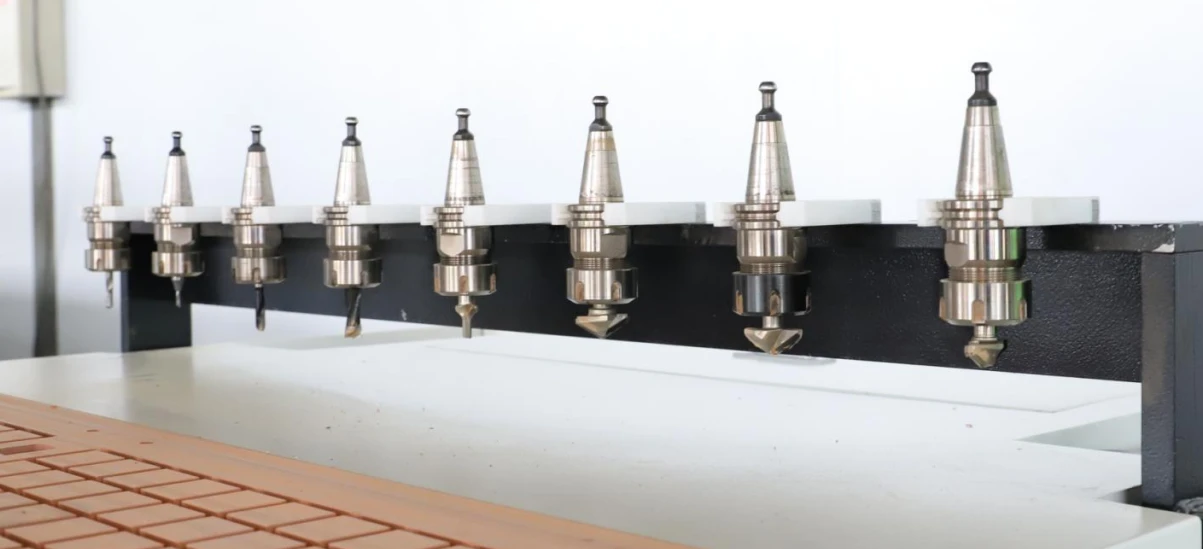
- Tool length and its position in the holder.
- Safe approach and retract travel.
- A rotary device or another elevated option you intend to fit.
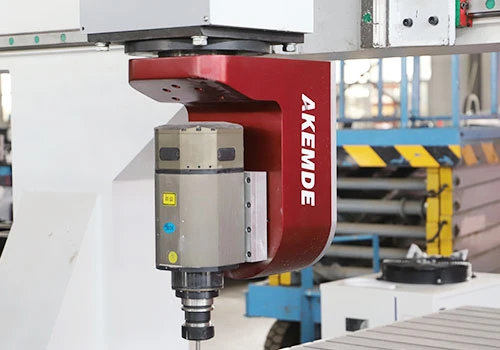
A rotary attachment for legs or columns must be included in the clearance review. The iGW-ATC-1325 page lists rotary and spindle-swing options subject to configuration; confirm their real space requirements with the intended part and tool.
Z 是最容易被低估的一维,因为它从不出现在零件图纸上,却天天出现在装夹里。
标称 Z 向数值不等于装上刀具后的工件净空。应结合以下项目核对实际可用高度及安全抬刀行程:
- 工件厚度;
- 台面以上的夹具或垫板高度;
- 刀具从夹头伸出的长度;
- 你以后可能增加的旋转或其他抬高配置。
如果你打算加旋转轴做车削类工件,Z 向净空就是那个决策的一部分,而不是另一件事。iGW-ATC-1325 列有旋转与主轴摆动选项,这类配置恰恰会吃掉 Z 向空间。
What if a part exceeds the envelope?
Each alternative changes the workflow and its labour cost:
| Situation | Option to evaluate | Consequence |
|---|---|---|
| Part longer than the usable X travel | A larger machine, or indexed repositioning against a repeatable datum where supported | More space and investment, or additional setup and toolpath matching |
| Sheet wider than the usable table | Pre-cut the stock or choose a wider suitable machine | Another handling stage or a different machine size |
| Long narrow mouldings or frame parts | A supported through-feed or staged process with location control | More reliance on accurate setup and joint alignment |
| Rotary parts such as legs or columns | A suitable rotary option with adequate clearance | A configuration and workholding decision, not simply a larger flat table |
These are planned process choices rather than defects. Compare their recurring handling and setup costs with the price of the machine.
可以比较以下几种方式,每一种都会改变流程:
| 情况 | 做法 | 代价 |
|---|---|---|
| 工件比 X 行程略长 | 重新夹持,用可复位的基准分两次加工 | 每件多一次装夹,且接刀处必须编程 |
| 板材比台面宽 | 先把板裁小,或换更宽龙门的机型 | 多一道搬运,或换一个机器级别 |
| 细长件(线条、框料) | 通过式或分次加工,配定位销 | 依赖装夹纪律,误差表现为接缝不齐 |
| 车削类工件(桌腿、柱) | 加旋转轴,并留出它需要的 Z 向空间 | 属于配置决策,不是台面决策 |
这些都不是缺陷。真正要决定的是:你买的是哪一种,因为每一种的人工成本都不会出现在报价单上。
Vacuum, T-slots or both?
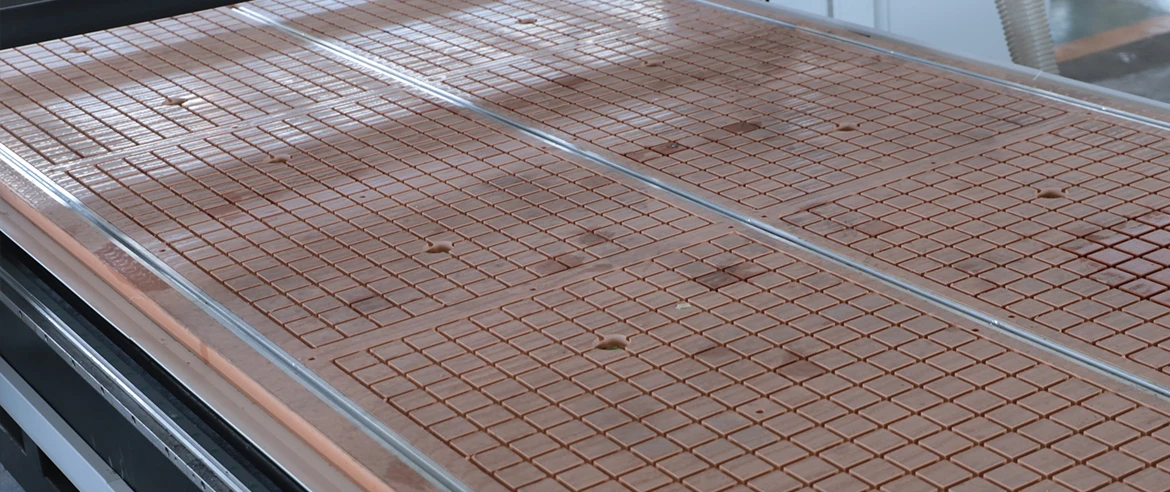
The iGW-ATC-1325 page lists a combined vacuum and T-slot table. The two holding methods address different work.
- Vacuum holds suitable sheet material without individual mechanical clamps in the cutting area. Holding force depends on the material, sealing, pump and exposed area.
- T-slots provide mounting points for fixtures when vacuum alone is unsuitable, including certain small, open or irregular parts.
- A combined table allows both methods, provided the setup and tool paths are reviewed when changing work.
If a quotation offers only one method, ask how the other jobs will be held. Large openings or small remaining areas can reduce effective vacuum holding, so those parts need their own assessment.
The spoilboard is part of the system. It may need resurfacing to maintain flatness, and changes in thickness affect the setup and work offset. Recheck heights after resurfacing or replacement. A worn, uneven board can cause inconsistent cutting depth even when the nominal table size is correct.
iGW-ATC-1325 列的是真空与 T 型槽组合台面,这个组合值得理解而不是略过:
- 真空靠整面吸附固定平板件,是板材加工能快起来的原因——没有压板要装,也没有压板可撞。
- T 型槽用来固定真空吸不住的工件:小件、带大开孔的件、需要机械夹持的件。
- 两者都有,意味着上午跑板材、下午上夹具,不用换台面。
如果一份报价只给其中一种,要问另一种活怎么办。纯真空台面很好用,直到第一个带大开孔的工件出现——真空漏气,工件就动了。
吸附垫板(spoilboard)是这套系统的一部分,不是耗材细节。它是真空透过的表面,磨损后要刨平,而刨平会改变你量过的 Z 向叠加。规划时应核对实际可用净空与垫板厚度,并在刨平或更换垫板后复核工件坐标和加工高度。反过来,台面上永远铺着同一块垫板、从不刨平,切深就会随板面起伏而漂移——这是与台面尺寸一起要确认的第二件事。
An afternoon checklist for selecting the size
- Measure the bounding dimensions of four large part families, including realistic work you plan to take on.
- Determine the margins needed by the actual clamps or vacuum layout, and record the tool diameter. Do not apply a universal allowance to every setup.
- Compare those requirements with the stock you buy. For nesting, the whole sheet must be held and processed.
- Confirm usable Z clearance with the part, fixture, spoilboard, tool and retract movement.
- Decide whether a rotary option is required and check both its height and length requirements.
- Write down how oversized work will be handled. An agreed process is more useful than leaving the decision until the order arrives.
- 量四类最大工件的外接尺寸,包括你明年想接的活。
- 按实际夹具或真空布局确定各边所需余量,记录刀具直径;不要对所有装夹套用固定余量。
- 与你采购的板材尺寸比一遍。板材更大,就以板材为准。
- 确认 Z 向叠加:最厚工件 + 夹具 + 刀具伸出。
- 判断是否有工件需要旋转轴;需要的话,确认它要的 Z 向与台面长度。
- 用一句话写下"超出包线的工件怎么办"。如果答案是"到时候再说",那个答案就是将来最花钱的地方。
Frequently asked questions
How do I choose a CNC router working area?
Start with the largest workpiece or sheet and check workholding, tool access and the complete path against the usable envelope. Nominal table dimensions alone are not enough.
Will 1300 × 2500 mm cover a standard cabinet sheet?
It is nominally larger than a 1220 × 2440 mm sheet by 80 mm and 60 mm overall. Confirm the actual vacuum, fixtures and cutting paths before approving the setup.
Is a larger table always better?
No. It can fit larger work, but costs more and takes more space. Match the confirmed envelope to your workload and plan any remaining oversized jobs.
How much Z clearance is needed?
Check part and fixture height, spoilboard, tool projection, retract travel and any rotary attachment. The published 250 mm Z figure on iGW-ATC-1325 is not an automatic guarantee of clear part height.
Can a part longer than X travel be machined?
Possibly, if the machine and process support accurate repositioning or through-feed. Review the datum, support and joining toolpaths. A larger machine is another option.
Are T-slots useful on a vacuum table?
Yes, when fixtures are needed for work that vacuum cannot hold reliably. The iGW-ATC-1325 page lists both vacuum and T-slot capability.
CNC 雕刻机的工作面积该怎么定?
从最大工件的外接尺寸出发,加夹持余量与刀具半径,再与所采购板材的尺寸比对。工件需求与板材需求中较大的那个决定下限。
标准橱柜板件需要多大工作面积?
1300 × 2500 mm 在标称尺寸上比 1220 × 2440 mm 的板材大 80 mm 与 60 mm,能否加工还需核对实际吸附、夹持与刀路。
台面是不是越大越好?
不是。更大的台面成本更高、占地更大,若工件仍超出确认过的可用范围,还需另行规划。包线要与工件和板材匹配。
Z 向净空要留多少?
要覆盖最厚工件、夹具或垫板、刀具伸出长度,以及你计划使用的旋转配置。iGW-ATC-1325 公布的 Z 向为 250 mm,但不能直接等同于装刀后的净空。
工件比 X 行程长还能加工吗?
在设备与工艺允许时,可用可靠基准重新定位或分次加工,需核对支撑、装夹与接刀路径;更大机型也是一种选择。
有真空台面还需要 T 型槽吗?
如果你加工真空吸不住的件——小件、带大开孔的件、需要机械夹持的件——就需要。iGW-ATC-1325 两者都提供。
Tell us what you need to make
Send material, maximum workpiece and stock dimensions, required operations and output. These inputs help select the usable envelope and holding arrangement.
把材料、最大工件尺寸、需要的工序、产能发给我们。这四个答案比任何台面表格都更快定出机型,也正是我们询盘表的字段。
- 查看完整包线与部件清单:iGW-ATC-1325 ATC 雕刻机;
- 对比其他包线:CNC 雕刻机与加工中心;
- 还在纠结机型?读数控开料机与 ATC 雕刻机;
- 准备定配置:发来材料、工件尺寸、工序与产能。