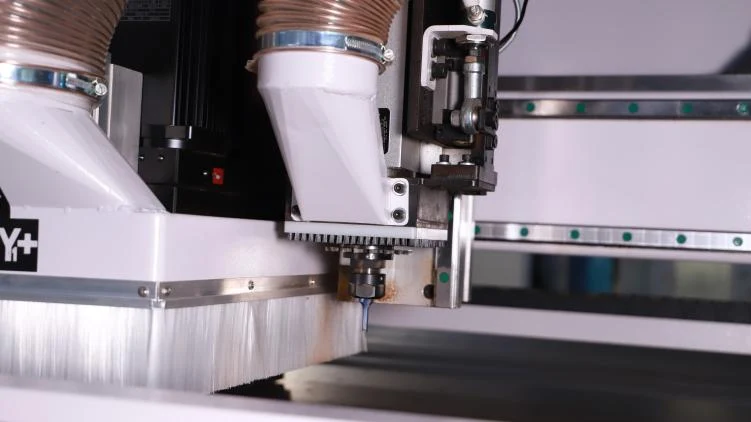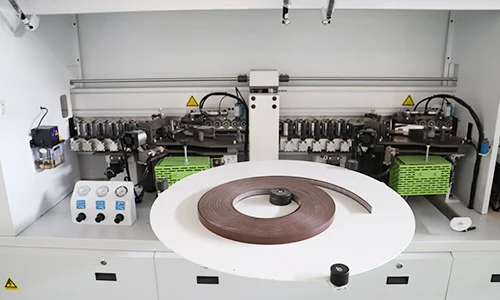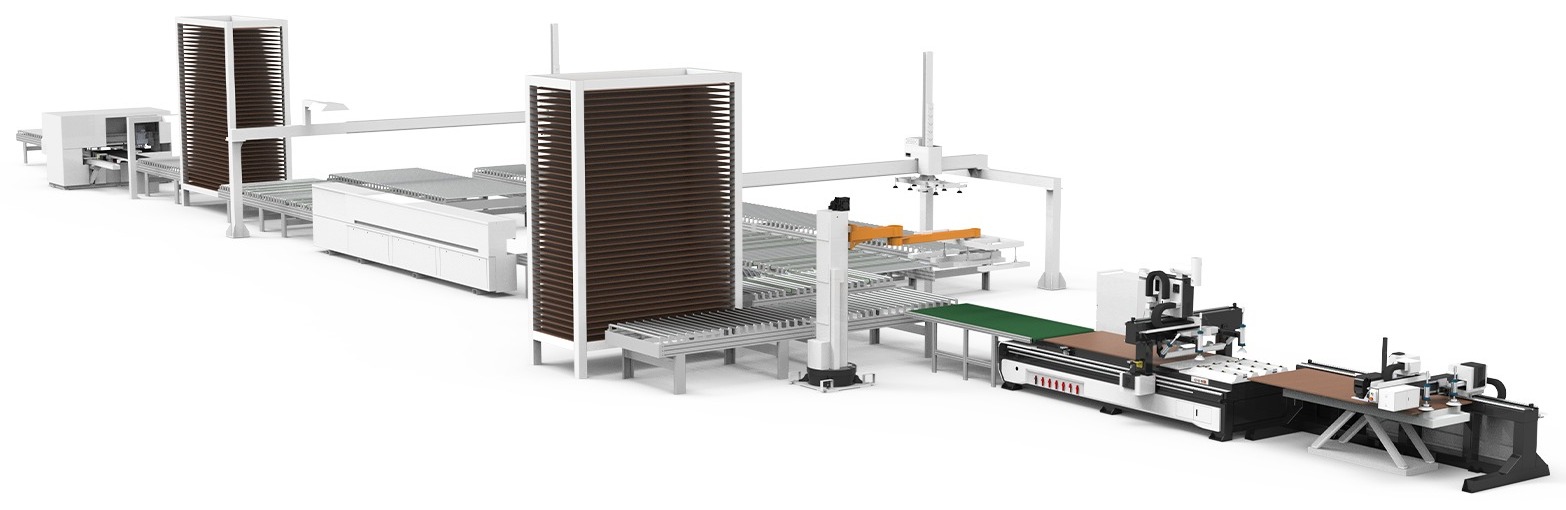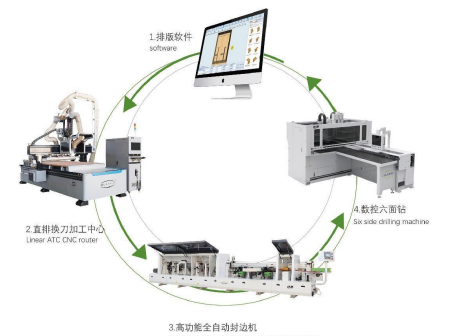
The three configurations mainly differ in the nesting or machining station and the final drilling station. The basic line combines linear ATC nesting with side drilling. The upgraded line uses a drilling and milling machining centre with double-head side drilling and optional vacuum pressing. The advanced line combines a linear ATC machining centre with six-sided drilling.
Panel supply, edge banding, unloading, transfer and line coordination are part of the planning scope for all three. Compare the actual station functions against your cabinet design rather than treating the tiers as a simple automation ladder.
三档的差别集中在两处:开料工位用哪一类加工中心,以及末端的钻孔工位用哪一种。基础线是直线 ATC 开料机配侧孔;升级线是钻铣加工中心配双头侧孔,并可选真空覆膜;高级线是直线 ATC 加工中心配六面钻。其余环节——板材供给、封边、下料转运、连线协同——三档都有。
如果按"自动化程度"比,三档像一把梯子;按工位逐一比,它们其实是"我的柜体需要哪种钻孔"的三个不同答案。
Which cabinet line suits a small workshop?
A basic line may suit standard cabinet components when the required operations can be divided between the nesting and side-drilling stations. The deciding factor is the machining needed on each face and edge, not workshop size alone.
A small workshop can consider an advanced configuration if the space and flow work. It cannot skip the data workflow: labels, nesting output and a panel list that the drilling station can read. Parts need a consistent identity when they reach drilling.
当柜体以标准件为主、孔位可以从板件侧面加工时,基础线就适合小车间。决定因素不是占地,而是你的板件设计里是否存在侧孔工位够不到的面。
小车间也能装高级线,前提是布局一次按整线规划。它通常做不到的是跳过数据这一环:标签、套裁输出、以及钻孔工位能读懂的板件清单。三档都假设板件到钻孔工位时已经有"身份"。
Side drilling and six-sided drilling
Side drilling machines work on panel edges for dowels, cam connectors and other assembly fittings. Face holes may need to be completed at the nesting stage or at another appropriate station.
Six-sided drilling equipment can access the two broad faces and four edges through its supported clamping and positioning sequence. Confirm its actual drilling and grooving range, minimum panel size and any transfer or regripping requirements.
The useful comparison is how many times a panel must be handled, identified and located to complete the required holes, rather than how new the equipment looks.
侧孔(side drilling)是在板件端面上加工孔位——也就是组装时给木榫、偏心件与连接件用的孔。它从板件侧面作业,因此适合连接面在端部的柜体组装。
六面钻(six-sided drilling)通过适配的夹持与定位过程加工板件两个大面与四条边。它依据板件数据作业,可减少人工翻面与重复定位;实际钻孔、开槽范围、最小板件尺寸与移夹要求需按机型确认。
这个差别才是三档之间真正的分界:它衡量的是板件要被翻转、识别、重新定位多少次,而不是机器看起来多新。
Compare the three lines station by station
| Station | Basic | Upgraded | Advanced |
|---|---|---|---|
| 01 Panel supply | Included in process scope | Included in process scope | Included in process scope |
| 02 CNC nesting | Linear ATC nesting machine | Drilling and milling machining centre | Linear ATC machining centre |
| 03 Edge banding | Automatic edge banding | Automatic edge banding | Automatic edge banding |
| 04 Drilling | Side drilling | Double-head side drilling | Six-sided drilling |
| 05 Optional pressing | Confirm separately | Optional vacuum pressing for membrane doors | Confirm separately |
| 06 Unloading and transfer | Included in planning | Included in planning | Included in planning |
| 07 Coordination | Confirm project scope | Confirm project scope | Confirm project scope |
- Basic. Covers panel supply, nesting, edge banding, side drilling and transfer, with auxiliary equipment confirmed separately.
- Upgraded. Changes the machining and side-drilling stations and offers vacuum pressing for membrane-door production.
- Advanced. Uses a linear ATC machining centre with six-sided drilling for a broader panel-processing workflow.
These are configuration comparisons. Confirm equipment quantities, handling, interfaces and optional items in the project quotation.
| 工位 | 基础线 | 升级线 | 高级线 |
|---|---|---|---|
| 01 板材供给 | 含 | 含 | 含 |
| 02 数控开料 | 直线 ATC 开料机 | 钻铣加工中心 | 直线 ATC 加工中心 |
| 03 封边 | 自动封边 | 自动封边 | 自动封边 |
| 04 钻孔 | 侧孔 | 双头侧孔 | 六面钻 |
| 05 可选压贴 | — | 真空覆膜(可选,用于模压门) | — |
| 06 下料转运 | 含 | 含 | 含 |
| 07 连线协同 | 按项目确认范围 | 按项目确认范围 | 按项目确认范围 |
按列读这张表,逻辑就出来了:
- 基础线覆盖板材供给、开料、封边、侧孔与转运。产品页把它定位为入门级橱柜加工流程,配套辅助设备单列为可选项。做柜体所需的一切都在,只是从装夹角度看钻孔是单面的。
- 升级线把开料工位换成钻铣加工中心、钻孔工位换成双头侧孔,并把真空覆膜作为模压门生产的可选项。它的定位是同时做柜体与门板。
- 高级线把开料工位换成直线 ATC 加工中心、钻孔工位换成六面钻,产品页对它的描述是面向柜体与门板生产的完整板材加工方案。
The practical difference between basic and advanced
Follow one panel from cutting to completed drilling. Count every move, turn and new location, and assign a labour and error cost to those actions.
With a side-drilling route, broad-face and edge holes may be made in different operations. Each stage needs a known reference, established through labels, fixtures or the machine program. A compatible six-sided drilling configuration can bring more of that work into one automated cycle.
- Labour per panel. Review which manual transfers and setups are actually removed.
- Error opportunities. Reorientation can introduce incorrect-face or reference-edge errors.
- Line rhythm. A station that needs repeated orientation changes may need a different buffer from the neighbouring edge bander.
This does not mean that an advanced line necessarily cuts faster. Cutting remains a separate decision at station 02.
差距在于:从开料结束到钻孔完成,一块板要被搬动、翻转、重新定位多少次,以及这些动作在人工与错误上要付多少钱。
侧孔方案里,板面上的孔与端面上的孔是在两种不同朝向下加工的。每次改变朝向都需要一个基准——要么操作工读标签,要么靠夹具定位。六面钻则可依据板件数据,将适配的面孔与侧孔集中到自动加工循环中,减少人工重复定位;是否移夹及具体范围仍按配置确认。
由此产生三项值得计入成本的后果:
- 单板人工。 一次装夹替代多次。
- 错误模式。 重新定位正是孔打在错误的面上、或偏离基准边的环节。
- 线的节奏。 需要重新定向的工位,其节拍与旁边的封边机不同,缓冲与排队就从这里产生。
要注意这个差距不是什么:不是"高级线切得更快"。切割是另一个决策,发生在 02 工位。
Cabinet bodies and cabinet doors are different workflows
A cabinet-body line does not automatically include a door-finishing process. Doors may need surface preparation and pressing.
| Line | Published process |
|---|---|
| Cabinet door line | Panel supply → CNC nesting → Surface sanding → Vacuum pressing → Unloading and transfer → Coordination |
| Described scope | ATC machining, sanding and vacuum pressing for the specified wooden, membrane and cabinet door applications |
The planning question is whether to add pressing to a shared flow or create a dedicated door flow. Optional pressing on the upgraded line provides an intermediate route. If doors occupy a large share of production, a separate process can reduce competition with cabinet-body output.
做柜体的线,不等于做门板的线。门板需要表面处理与压贴,IGOLDENCNC 把它作为独立配置处理:
| 线体 | 产品页公布的顺序 |
|---|---|
| 橱柜门生产线 | 板材供给 → 数控开料 → 表面砂光 → 真空覆膜 → 下料转运 → 连线协同 |
| 门板线描述范围 | 自动换刀加工、砂光与真空覆膜;木门、吸塑门与橱柜门 |
所以真正要排的次序问题是:买一条线再加压贴,还是买两条线?升级线把真空覆膜做成可选项,是中间路线——一条线,靠配置把门板能力打开。如果门板占营收比重很大,专用门板线把两种流分开,门板压贴就不会堵住柜体产能。
Which costs are easiest to overlook?
- Drilling and workholding. Compare the labour and layout consequences of each drilling method.
- Data and labelling. Define label printing, nesting software and the interface to downstream stations.
- Buffers and transfer. Include their number, capacity and equipment.
- Pressing and surface preparation. If doors are included, confirm the equipment and site services they need.
- Site work and commissioning. Include power, extraction, compressed air, floors, training and spares.
A list of machines without interfaces is not a complete line scope. Ask how panels travel from edge banding to drilling and who is responsible for that connection.
有五个成本项不在机器价目表里,却反复决定最终数字:
- 钻孔工位的装夹方式。 六面钻改变的是人工与布局,也是三档之间最大的一级台阶。
- 数据与贴标。 三档都假设板件带身份。标签、打印、套裁软件,以及开料输出到下游工位之间的接口,都必须明确。
- 缓冲与转运。 缓冲位数量,以及工位之间的转运设备。
- 压贴与表面处理(若含门板)——包括压机需要的现场条件。
- 现场工程与调试——电力、吸尘、压缩空气、地面,加上培训与备件。
只列工位、不列工位之间接口的报价,是机器清单,不是整线报价。要问一句:板件从封边到钻孔之间怎么走,这段衔接由谁负责。
Four questions to choose a configuration
- Where are the holes? Review which operations the nesting and side-drilling stations can cover. When face and edge work becomes complex, compare a six-sided drilling cycle.
- Are doors a current or future product? Large current volumes may justify a separate flow. Smaller or future requirements may suit an agreed pressing option.
- What is the part mix per shift? Frequent size changes put pressure on data, scheduling and buffers, not only cutting speed.
- Who loads and unloads? Walk through the quoted configuration and count the manual actions, including reorientation around drilling.
If the answers point in different directions, address the main process constraint first and reserve room for later stages. Plan the eventual layout before ordering the first machine.
在比价之前先回答这四个问题,每个答案都会把你推向某一档。
- 孔位在哪? 所有孔都能从板件侧面加工,基础配置就够;板面与端面都涉及,六面钻就在干实事。
- 门板是现在做还是以后做? 现在做且量大:把门板线当作独立流。以后做且量小:升级线加压贴选项,保持一条流。
- 每班的板件结构如何? 规格多、换型频繁,压力落在数据与缓冲上,而不是切割速度上。
- 谁来上下料? 按配置走一遍人工,包括钻孔工位省掉或没省掉的重新定向环节。
如果两个答案指向不同方向,通常的解法是先买能解决钻孔制约的那一档,其余按阶段规划——这也是为什么在第一台设备下单之前,布局就应该按整线画好。
Frequently asked questions
Which line suits a small workshop?
A basic configuration may suit standard panels if the planned nesting and side-drilling operations cover the hole requirements. Layout and part design matter more than the size label alone.
What distinguishes basic from advanced?
The machining and drilling stations: linear ATC nesting with side drilling versus the advanced machining-centre and six-sided drilling route. Compare setups per panel rather than assuming faster cutting.
What does the upgraded line add?
A drilling and milling machining centre, double-head side drilling and an optional vacuum-pressing stage for compatible door production.
Is a separate door line necessary?
It is worth evaluating when doors represent a substantial workload. The dedicated door process includes sanding and vacuum pressing; the upgraded cabinet configuration offers pressing as an option.
Which budget items are commonly missed?
Drilling setup, labelling and interfaces, buffers and transfers, door pressing and preparation, plus site work, commissioning, training and spares.
Can side drilling be replaced with six-sided drilling later?
It is a station replacement, not a simple accessory. It changes space and data requirements. Plan a replaceable station and material flow before finalising the layout.
小车间适合哪一档橱柜生产线?
柜体以标准件为主、孔位可从侧面加工时,基础线就够。决定因素通常不是占地,而是钻孔需求。
基础线与高级线的真实差距是什么?
钻孔工位与加工中心:侧孔对六面钻,直线 ATC 开料机对直线 ATC 加工中心。差距体现为每块板的装夹次数,而不是切割速度。
升级线比基础线多了什么?
开料换成钻铣加工中心、钻孔换成双头侧孔,并增加真空覆膜选项用于模压门生产。
需要单独上橱柜门生产线吗?
只有门板占产出较大比重时才需要。门板线把表面砂光与真空覆膜作为固定工位;升级橱柜线则以可选项方式提供压贴。
做整线预算最容易漏什么?
钻孔工位的装夹、贴标与数据接口、缓冲与转运设备、含门板时的压贴与表面处理,以及现场工程与调试培训备件。
以后能不能从侧孔升级到六面钻?
那是工位替换而不是加装,会改变布局与数据流。应在布局定稿前决定,或按可替换工位的思路预留占地与流向。
Tell us what you need to make
Send material, cabinet-panel and door dimensions, drilling and edging requirements, and output per shift. These inputs help select the station configuration.
把材料、板件与门板尺寸、需要的钻孔与封边工艺、每班产能发给我们。这四个答案比任何对比表都更快定档,它们也正是我们询盘表的字段。
- 对比三种配置:基础、升级与高级橱柜生产线;
- 如果主要产品是门板,看橱柜门生产线;
- 定档之前的那个决策,读什么时候该从单机走到板式家具生产线;
- 准备定配置:发来材料、尺寸、工艺与产能。