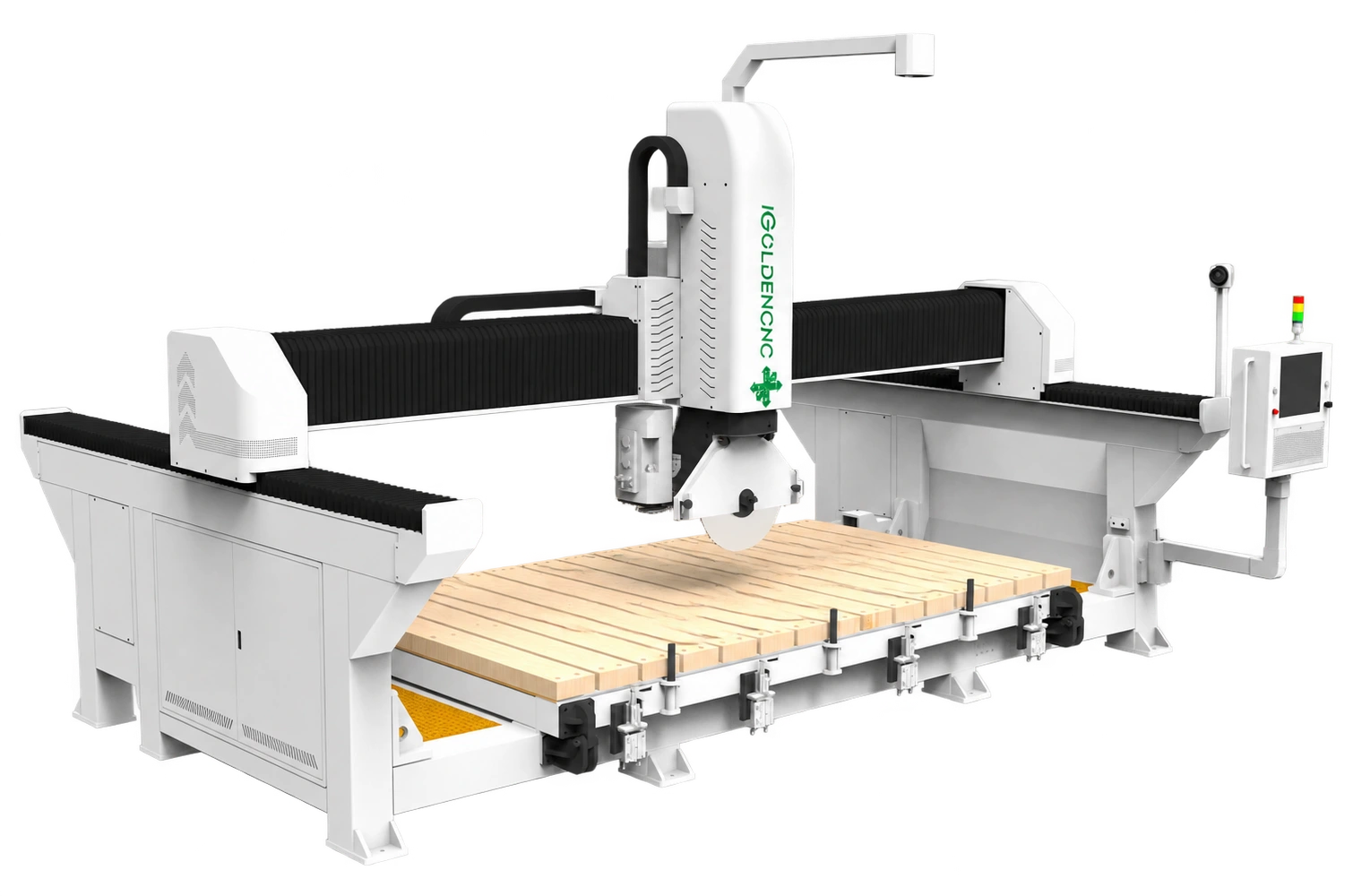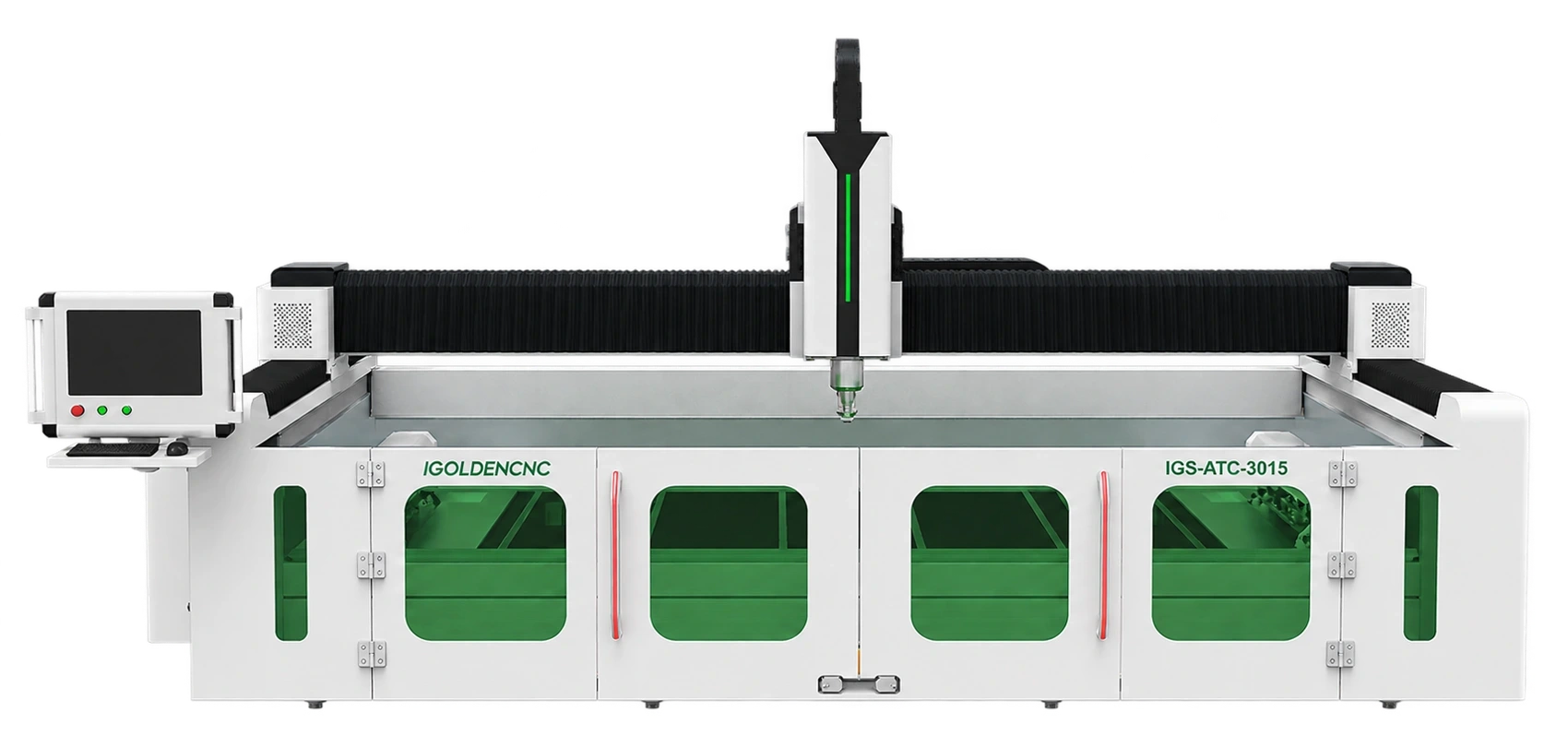
A bridge saw is designed around a slab on a table and the cutting-head configuration. A stone machining centre brings a work envelope, tools and holding arrangement together for supported cutting, milling, drilling and profiling operations. Standard countertop cutting may favour a bridge saw; complex multi-operation work can justify a machining centre.
Both can serve batches or individual jobs. The distinction is the order mix, required operations and number of setups—not a universal ranking of machine strength.
桥切机围绕"台面上的一块大板"设计,锯头负责切。石材加工中心围绕"工作包线与刀库"设计,通过适配刀具与夹持过程组合切割、铣削、钻孔与型面;是否需要再次装夹,应按工件与设备确认。形状标准的批量台面适合桥切;需要多刀具、多道工序的复杂件,可评估加工中心。两类设备都可能用于批量或单件,应按具体工艺比较。
这是订单结构的问题,以及一件活需要几次装夹的问题——不是"哪台更强"的问题。
Batch work or individual complex parts?
For this comparison, batch work means repeated material and process conditions with relatively few changes. Individual work means more variation between parts. Match the machine to the pattern of change, not simply the quantity.
A batch of standard countertops in one material and thickness needs suitable slab support, repeatable programs and a productive cutting cycle. A bridge saw is a natural candidate.
A reception counter, shaped washbasin or part combining several edges and openings may benefit from tool changes and fewer transfers between operations. A suitable machining centre is another candidate.
A workshop doing both may keep a bridge saw for cutting and use queue and cycle measurements to decide whether the next investment should be machining, polishing or handling.
多数车间里这条分界是成立的:批量指件多、变化少;单件指件少、变化多。机器要匹配变化的模式,而不是件数。
批量活——同一材料、同一厚度的一批标准台面——需要的是切得快、能承住大板、同一程序反复跑的机器。那是桥切机的活。
单件与复杂件——前台、异形洗手台、多个边型与开孔并存的件——需要的是能换刀、不必重新装夹就能把一件做完的机器。那是加工中心的活。
两类都做的车间,通常留着桥切机负责切割,再按"排队在哪"决定加一台加工中心还是一台抛光工位。
Which machine can cut slabs and form edge profiles?
A bridge saw with the appropriate spindle and tools can combine cutting with supported shaped operations. IGOLDENCNC describes its five-axis bridge-saw platform as using CNC-controlled tool motion for countertop cutting and shaped work, with the actual operations determined by the selected blade and spindle configuration.
A stone machining centre provides another route, combining suitable tools and operations on a workpiece. Its practical scope depends on the magazine, spindle, software and holding arrangement.
More than one machine may be able to perform both tasks. Compare the complete cycle to find out which configuration is better suited to your slab flow and part requirements.
配主轴配置的桥切机既能切也能做异形。IGOLDENCNC 对五轴桥切平台的定位正是如此:CNC 控制的刀具运动支持台面加工的切割与异形作业,而具体工序取决于所选的锯片与主轴配置。
石材加工中心是另一个答案:它为"一件活上多道工序 + 换刀"而建,而不是为"最大化板材吞吐"而建。
所以"哪台两样都能做"的诚实回答是:有几台都能,区别在于各自被优化去做什么。桥切优化的是大板,加工中心优化的是工件。问自己:你的瓶颈是哪一个。
Bridge saw and machining centre: the working distinction
A bridge saw carries a cutting head on a beam above the table. The supported slab remains on the table while the machine moves the head through the required paths, subject to any repositioning needed.
A stone machining centre is organised around its working envelope and tooling system. It can combine compatible cutting, milling, drilling and profiling in a planned setup, although access or workholding may still require another setup.
Both need a distinction between material that physically fits on the table and material that can be fully machined. Check travel, tool reach, fixtures and safe clearances. For a bridge saw, blade range and spindle options are prominent; for a machining centre, magazine capacity and the complete tool set also deserve attention.
桥切机把切割头挂在跨过台面的横梁上。板料不动、横梁动,这正是它能切大板重板而不必每刀重新定位的原因。应区分台面能承放的板材与刀具实际可加工的范围。
石材加工中心——如产品线中的数控石材加工中心——围绕带刀库的工作包线设计,可在计划装夹中组合适配的切割、铣削、钻孔与型面,刀具可达性或夹持限制也可能要求追加装夹。它的包线定义的是能做完的最大工件,而不是能承住的最大板料。
这个措辞差异在比价时很重要:桥切的参数谈 X、Y 行程与锯片直径,加工中心的参数谈工作包线与刀具容量。
Compare the two configurations
| Decision | Bridge saw | Stone machining centre |
|---|---|---|
| Main planning focus | The slab and cutting process | The part and its required operations |
| Operations | Cutting; shaped work according to configuration | Supported multiple operations with tool changes |
| Workholding | Support and reference the slab; reposition if the process requires | Hold the part for compatible operations; confirm any additional setups |
| Typical use to evaluate | Standard countertop cutting and slab throughput | Complex or multi-operation components, in batches or individually |
| Programming | Cutting paths, openings and supported contours | Paths, tool changes and process sequence |
| Tools | Compatible blades and optional spindle tools | A set covering the specified operations |
| Confirm | Usable slab envelope, blade range and spindle options | Usable envelope, magazine capacity and holding for shaped parts |
Compare setup cost across the actual order. Repeated parts can share preparation work; highly varied parts may incur it every time. Cutting speed alone does not describe that difference.
| 决策维度 | 桥切机 | 石材加工中心 |
|---|---|---|
| 围绕什么设计 | 台面上的大板 | 工作包线内的工件 |
| 主要工序 | 切割;异形取决于配置 | 多工序 + 换刀 |
| 装夹方式 | 一块板一个夹持位;超行程需重新夹持 | 在适配装夹中组合工序;核对追加装夹需求 |
| 适合 | 批量台面、标准形状、板材吞吐 | 单件、复杂件、多工序件 |
| 编程 | 切割路径、开孔、轮廓 | 路径 + 换刀 + 工序顺序 |
| 刀具 | 锯片范围,配主轴时另有刀具 | 覆盖各工序的刀具组 |
| 必须确认项 | 板材包线、锯片范围、主轴配置 | 工作包线、刀具容量、异形件的夹持 |
"装夹方式"这一行要读两遍。批量活里装夹被摊到很多件上,限制你的是板材包线;单件活里装夹是每件都要付的,成本由装夹次数——而不是切割速度——决定。
What does “batch” mean for this decision?
Look at how often the process stops for a new setup, not just the number of pieces.
Twenty similar countertops produced with the same program and holding strategy can behave like a batch. Twenty different washbasins across a week may require a fresh program or setup for each, despite having the same piece count.
- With few changes per shift, prioritise a productive and repeatable material-processing cycle.
- With frequent changes, compare how the equipment reduces preparation and repeated setups per part.
Two workshops with the same monthly output can therefore need different configurations.
批量不是件数,而是机器停下来重新配置的次数。
一个车间做二十块一模一样的台面,二十件也算批量,因为程序与装夹都不变。一个车间一周做二十块各不相同的洗手台,二十件也是单件,因为每件都要改装夹。
这个定义会改变购机建议:
- 每班换型次数少,买把板材吞吐最大化的机器;
- 每班换型次数多,买把单件装夹次数最小化的机器。
月产量相同的两个车间,正因为这一点可能需要不同的机器。
When does a complete line enter the decision?
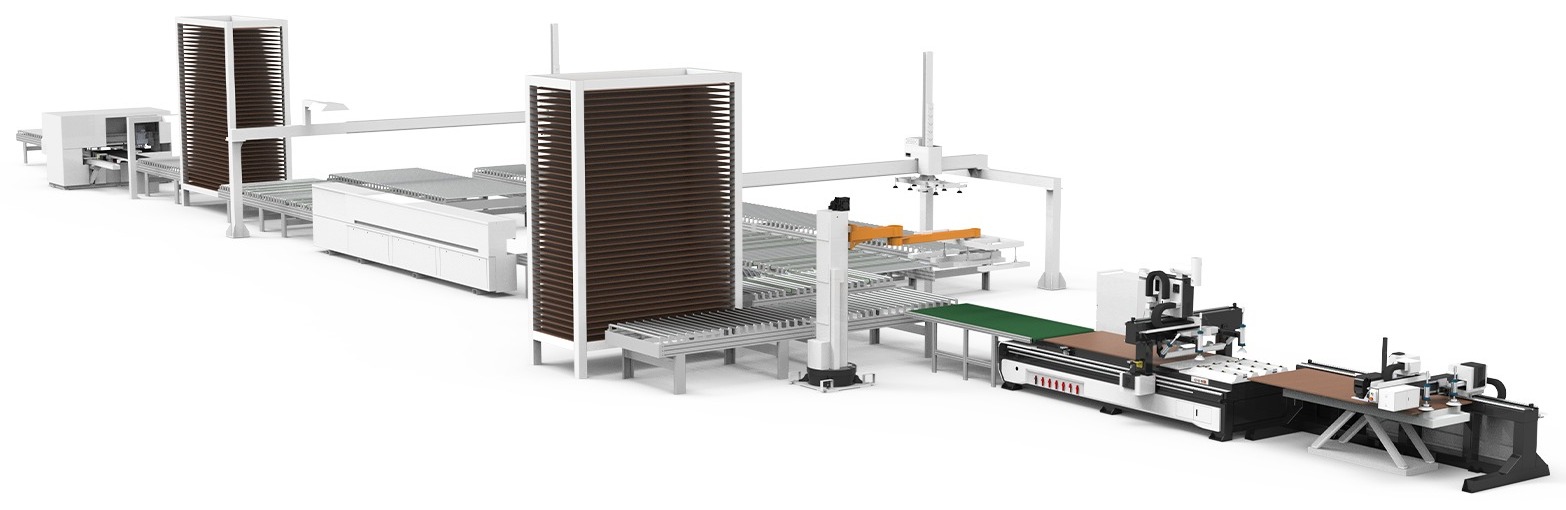
The next level is material flow between machines. IGOLDENCNC lists an intelligent stone-slab line alongside other connected production systems.
Evaluate a line when loading, transfer or unloading constrain output, rather than assuming another machining capability will solve the queue. A slab waiting for lifting equipment will still wait after a faster machine is installed.
The same order of investigation appears in the panel furniture line guide: identify the limiting handoff, then compare the investment and the complete process.
两台机器之上还有"线"的问题。IGOLDENCNC 在可连接生产系统里列出智能石板生产线,与板式家具线、玻璃切割线并列,框架都是同一句:你的材料,一条完整的生产流。
当制约是物料流——板进得来、切得动、出得去——而不是单件复杂度时,石板线才成立。如果瓶颈是板料等吊装,再强的加工能力也帮不上。这个排序逻辑与板式家具那一侧相同,见什么时候该从单机走到板式家具生产线。
Edge finishing is a separate decision
Cutting, profiling and polishing should be checked separately. Edge finishing can become a queue, particularly when it is performed at another station; its actual time depends on the material, profile, tools and finish specification.
The stone range includes dedicated edge-processing equipment. Determine what the work is waiting for:
- Cut parts waiting for polished edges: review the polishing station and its loading or tooling before assuming the saw is the constraint.
- Parts waiting for another setup because a profile cannot be made: evaluate a spindle option, suitable tools or a machining centre.
- Both stations waiting for lifting: investigate the material-handling route.
切割与异形是两个决策,边部抛光是第三个,而且常常是排队发生的地方——抛光可能在独立工位完成,实际节拍受材料、边型、刀具与表面要求影响。
IGOLDENCNC 的产品线里列有石材磨边机,意味着边部可以是一个专用工位,而不是切割机的一个功能。先问清你的边部活现在在等什么:
- 抛光边排在锯后面等:制约在抛光工位,不在锯。
- 件要等第二次装夹,因为锯做不了型面:那是需要主轴配置或加工中心的论据。
- 两者都在等吊装:制约是物料流,两台机器都不是答案。
A checklist before selecting the equipment
- Classify the last 50 orders by required operations and geometry. Check which can be completed on each proposed configuration; do not use operation count alone as a rule.
- Count changeovers per shift as well as pieces per month.
- Measure both the largest slab to support and the largest part to finish. They are different requirements.
- Record whether work queues beside the saw, edge-finishing station or lifting equipment.
- Confirm holding for shaped parts: vacuum cups, fixtures or a suitable combination.
- List the tool set required for each machine and who supplies it.
- 把最近 50 单按"每件工序数"分类。逐项核对候选设备能否完成,不能单凭工序数量判断。
- 数每班的换型次数,而不是每月的件数。
- 量你必须承住的最大板料,以及你必须做完的最大工件。这是两个不同的数字,指向不同的机器。
- 标出工件在哪里等:锯旁、抛光旁,还是吊装旁。排队告诉了你制约在哪。
- 确认异形件的夹持方式:吸盘、夹具,还是两者组合。
- 确认每台机器需要的刀具组,以及由谁承担。
Frequently asked questions
Which machine suits batch work?
A bridge saw is often a useful starting point for repeated standard slab cutting. A machining centre may suit repeated multi-operation parts. Compare the actual features, cycle and holding rather than quantity alone.
Can one stone machine cut and profile?
A suitably configured bridge saw may do both, while a machining centre uses its tool set for supported operations. The answer depends on the spindle, tools, access and part requirements.
What is the main difference?
A bridge saw is centred on slab cutting; a machining centre combines a working envelope and tool-changing arrangement for part operations. Neither description guarantees that every job is finished in one setup.
How do I distinguish batches from individual work?
For this decision, count changes in program, tools and holding. Twenty repeated countertops can share preparation; twenty different jobs may each need a new setup.
Is a separate polishing station needed?
Consider it when measured finishing demand and queues justify it. First check whether loading, tools, settings or the existing finishing method are the actual constraint.
Is a stone-slab line worth considering?
Evaluate it when transfer and handling constrain the required output. Include the complete process, workload and project cost in the decision.
石材加工中心与桥切机,批量活该选哪个?
重复性标准切割可先评估桥切机;重复的多工序复杂件也可能适合加工中心。应比较实际几何、装夹与完整加工周期。
哪台石材设备能同时做板材切割与边部型面?
配主轴配置的桥切机可以切也做异形;石材加工中心靠换刀完成多道工序。选哪台取决于你的瓶颈是板料还是工件。
桥切机与加工中心的区别是什么?
桥切围绕台面上的大板设计、以切割为主;加工中心围绕带刀库的工作包线设计、以组合适配的多道工序为主,是否需要追加装夹按实际工件确认。
怎么判断我的活是批量还是单件?
按换型次数判断,不按件数。二十块相同的台面是批量;一周二十块各不相同的台面是单件,因为每件都要改装夹。
需要单独的抛光工位吗?
当实测抛光需求与排队情况支持新增工位时,可以评估;应先检查上料、刀具、参数与现有工艺是否才是真正的制约。
石板生产线值得上吗?
只有当制约是物料流——板料在等搬运,而不是工件在等加工——时才值得。
Tell us what you need to make
Send material, slab and finished-part dimensions, the operations required on each part and planned output. These inputs separate the slab-flow requirements from the part-machining requirements.
把材料、板料与工件尺寸、每件需要的工序、产能发给我们。这四个答案把"板料问题"和"工件问题"分开,也正是我们询盘表的字段。
- 在石材加工设备页对比全系列;
- 异形作业的轴数能力,见五轴数控石材桥切机;
- 在纠结轴数?读四轴与五轴桥切;
- 石材连线方案,见生产连线;
- 准备定配置:发来材料、尺寸、工序与产能。