Workshop visits and equipment discussions bring production questions into focus. Explore the photos alongside practical considerations for materials, equipment and process planning.
Bring cabinet-part drawings, sheet sizes and machining requirements together when planning a CNC nesting workflow.
Explore the application+
On the workshop floor
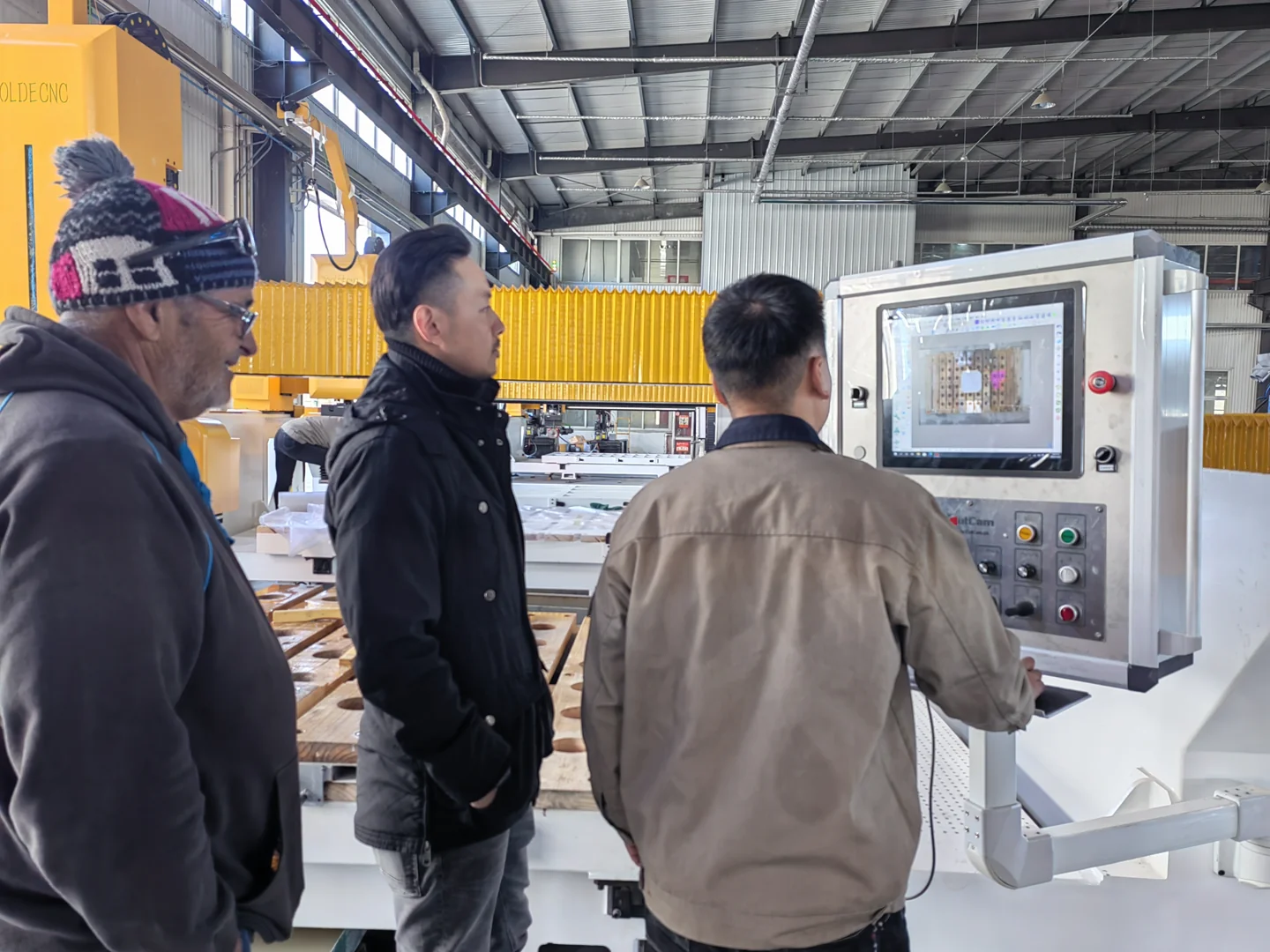
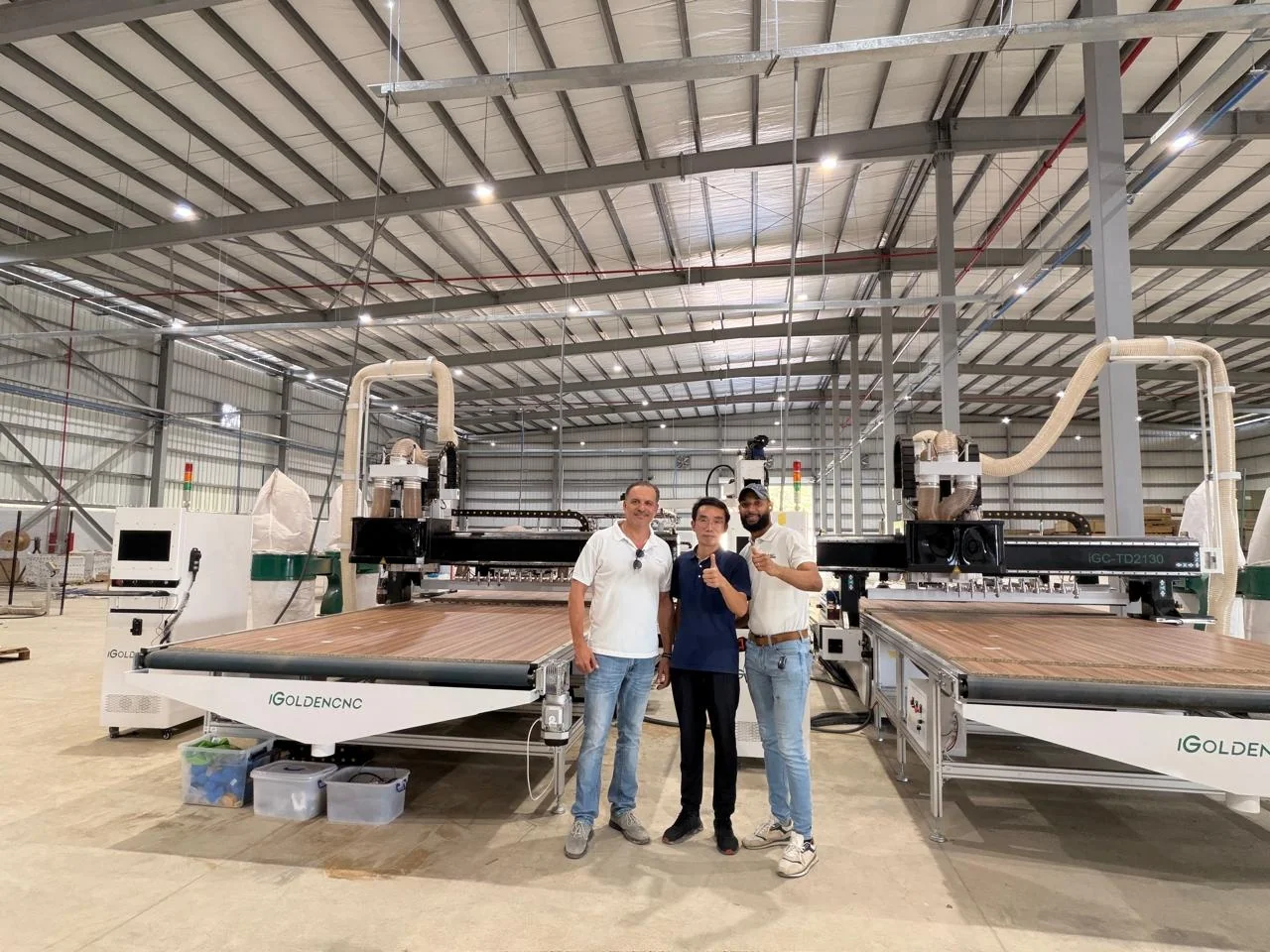
Visitors stand beside CNC woodworking machines in a workshop. The photo offers a view of the machine tables and the space around them.
Application requirements
Cabinet side panels, shelves and door components can require different cutting and machining operations. Part drawings, sheet thickness and the smallest part size help define the setup.
Configuration approach
Compare the working area, tool-changing arrangement, vacuum holding and dust extraction against the intended parts. Check how machining data will be prepared and transferred.
Process considerations
Confirm tool selection, workholding and machining order through sample cuts. Plan how finished parts will be identified and passed to edge banding or drilling.
Start the discussion
Share representative cabinet drawings, the sheet formats used in your workshop and your current downstream equipment.
Plan cutting around slab dimensions, finished-part geometry and the next polishing or assembly operation.
Explore the application+
On the workshop floor
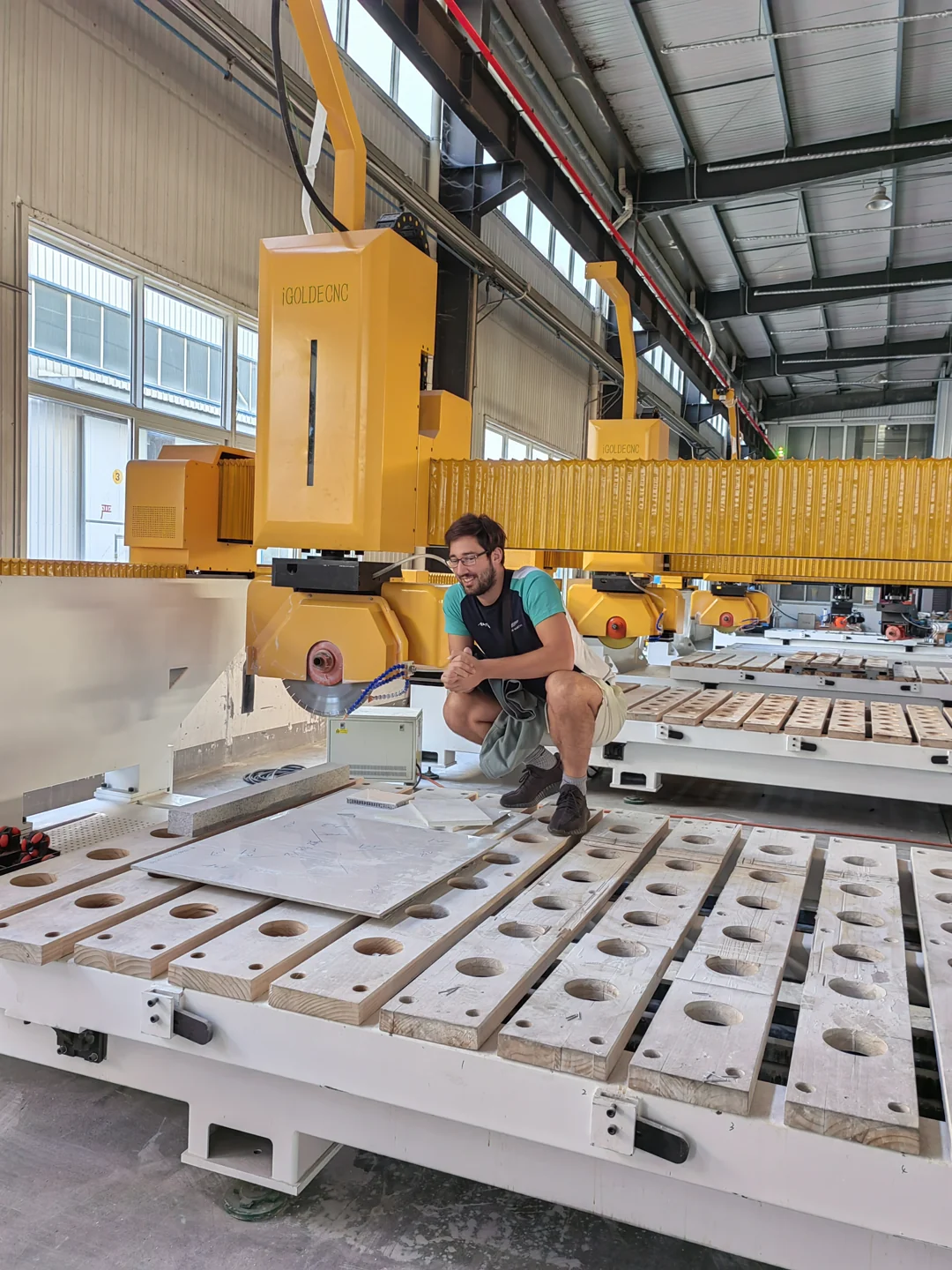
The workshop photo shows a bridge-type cutting machine, a circular saw blade and stone material on the worktable.
Application requirements
Countertop blanks, rectangular panels and edge components call for a clear cutting plan. Material type, slab thickness and finished dimensions are the starting points.
Configuration approach
Review table size, blade suitability and any required angled cuts. Additional openings or contour work should be matched to the functions of the chosen equipment.
Process considerations
Check slab support, positioning and cooling arrangements, then assess the cut edge on a material sample before setting production parameters.
Start the discussion
Provide a part drawing, material description and workshop handling constraints so the cutting and downstream steps can be reviewed together.
Consider joint access, material thickness and fit-up when discussing handheld welding equipment for fabricated parts.
Explore the application+
On the workshop floor
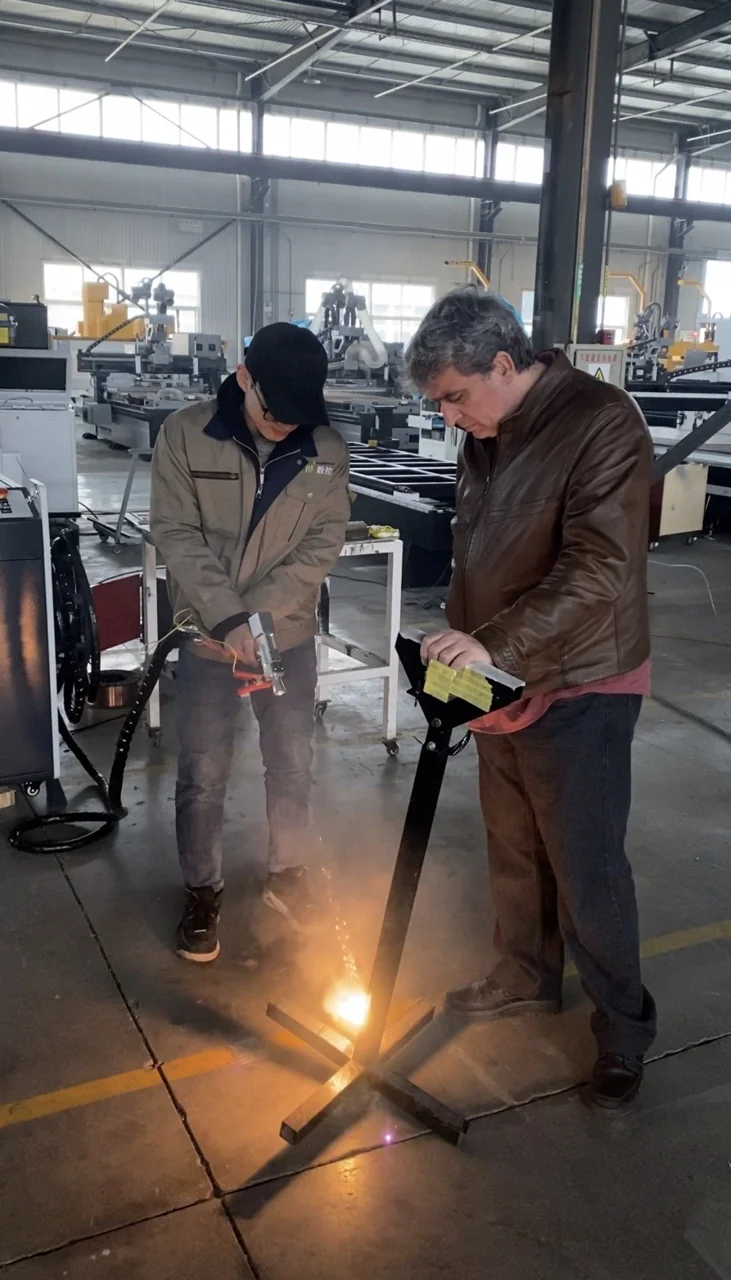
Two people are beside a metal assembly during a handheld welding demonstration, with other equipment visible in the workshop.
Application requirements
Frames, brackets and enclosure parts vary in joint access and fit-up. Identify the material, thickness, joint form and finish requirements before selecting equipment.
Configuration approach
Compare the welding head, cooling arrangement, wire-feed options and suitable process range against the actual parts to be joined.
Process considerations
Sample welding helps assess joint appearance and penetration for the intended material. Plan suitable fixtures, fume extraction and laser safety protection before operation.
Start the discussion
Share a joint drawing or part photograph, the material specification and the areas that are difficult to reach with your current process.